Homeowner guide
Do I Have Lead Pipes? A Lebanon County Homeowner's Guide to Service Lines
Water authorities across Lebanon County have been writing to customers about service line material. This guide explains what the letter means, how to check your own pipe in about five minutes, and what your options are if it turns out to be lead.
If a letter arrived from your water authority talking about service line material, you are not alone and you are not being singled out. Utilities across Lebanon County have been sending these because a federal rule required them to.
This guide covers what the letter actually means, how to check your own pipe without hiring anybody, and what your realistic options are if it turns out to be lead or galvanized steel.
Why every water system in the country did this at once
The US Environmental Protection Agency’s Lead and Copper Rule Improvements require public water systems to identify what every service line in their system is made of, tell customers what the records show, and replace the lead ones. The EPA’s stated timeline for systems nationally is to identify and replace lead pipes within about ten years, along with a duty to tell people where lead pipes are and when replacement is planned.
Building those inventories meant going back through decades of records, and the records are patchy. That is why so many letters say “unknown” rather than naming a material.
Locally, the City of Lebanon Authority, which supplies Lebanon city and a number of surrounding municipalities, completed its inventory and wrote to affected customers. It has published service line information so that customers can look up their own address. Other systems serving the county have run the same process on their own schedules.
What the letter is telling you
Inventory letters generally sort addresses into a few categories.
Lead. Records show a lead service line. This one is definite and it is the priority for replacement.
Galvanized requiring replacement. Galvanized steel pipe that is or was downstream of a lead line or lead gooseneck. Galvanized pipe can absorb lead into its interior surface and keep releasing it afterwards, which is why it gets grouped with lead rather than treated as safe.
Unknown. The records did not settle it. This is usually the biggest group, and it is not a finding of lead. It means nobody has verified the material yet.
Non-lead. Copper, plastic or another material that does not present a lead concern.
The important thing about the unknown category is that you can often resolve it yourself, today, for free.

Checking your own service line in about five minutes
You need a coin or a key, a strong magnet, and a torch.
Step 1: find where the water comes in. Follow the pipe back from your water meter towards the wall it passes through. In most Lebanon County houses this is in the basement, usually on the wall facing the street. What you want is the section of pipe on the street side of the meter, before any valve, where it emerges from the wall or floor.
Step 2: look at it. Clean off any dust or paint with a rag first so you are looking at the pipe rather than at a coating.
Step 3: scratch it with the coin or key, gently, on a small area.
Step 4: hold the magnet against it.
Now read the result:
| What you see | Scratch reveals | Magnet | Most likely material |
|---|---|---|---|
| Dull grey, often with a slightly swollen or bulbous joint | Shiny silver, like a pencil mark on foil | Does not stick | Lead |
| Grey, sometimes rusty, threaded fittings | Stays dull grey | Sticks firmly | Galvanized steel |
| Brown or dark orange, like a penny | Bright copper, pinkish | Does not stick | Copper |
| White, blue, grey or black, feels like plastic | Plastic underneath | Does not stick | Plastic (PEX, PVC or HDPE) |
Two details make this more reliable. Lead is soft, so the scratch goes in easily and comes up bright silver, and lead lines often have a distinctive bulged joint where they were wiped into a fitting. Galvanized is the one the magnet sticks to, and that magnet test is the single most useful discriminator, because galvanized and lead can look similar under years of dust.
If the pipe is painted, wrapped, or buried straight into a concrete floor with nothing visible, you may not be able to tell. That is a fair outcome. Report it to your utility as unverified and ask what they advise.
What you have found, and what it means
Plastic or copper. Your service line is not a lead concern. Note that this does not say anything about your interior plumbing, and homes plumbed before lead solder was banned in the mid 1980s can still have lead at the joints of copper pipe.
Galvanized. Worth acting on for two separate reasons. If it was ever fed by lead, it can hold and release lead. Independently of that, galvanized pipe corrodes closed from the inside over decades, which is why houses on original galvanized supply have poor upstairs pressure and discoloured water after sitting.
Lead. This is the case to move on. Tell your water authority what you found, because it improves their inventory and it puts your address in the right category for their replacement programme.
The ownership split, which is the part that costs money
This is the detail that catches people out, so it is worth being precise.
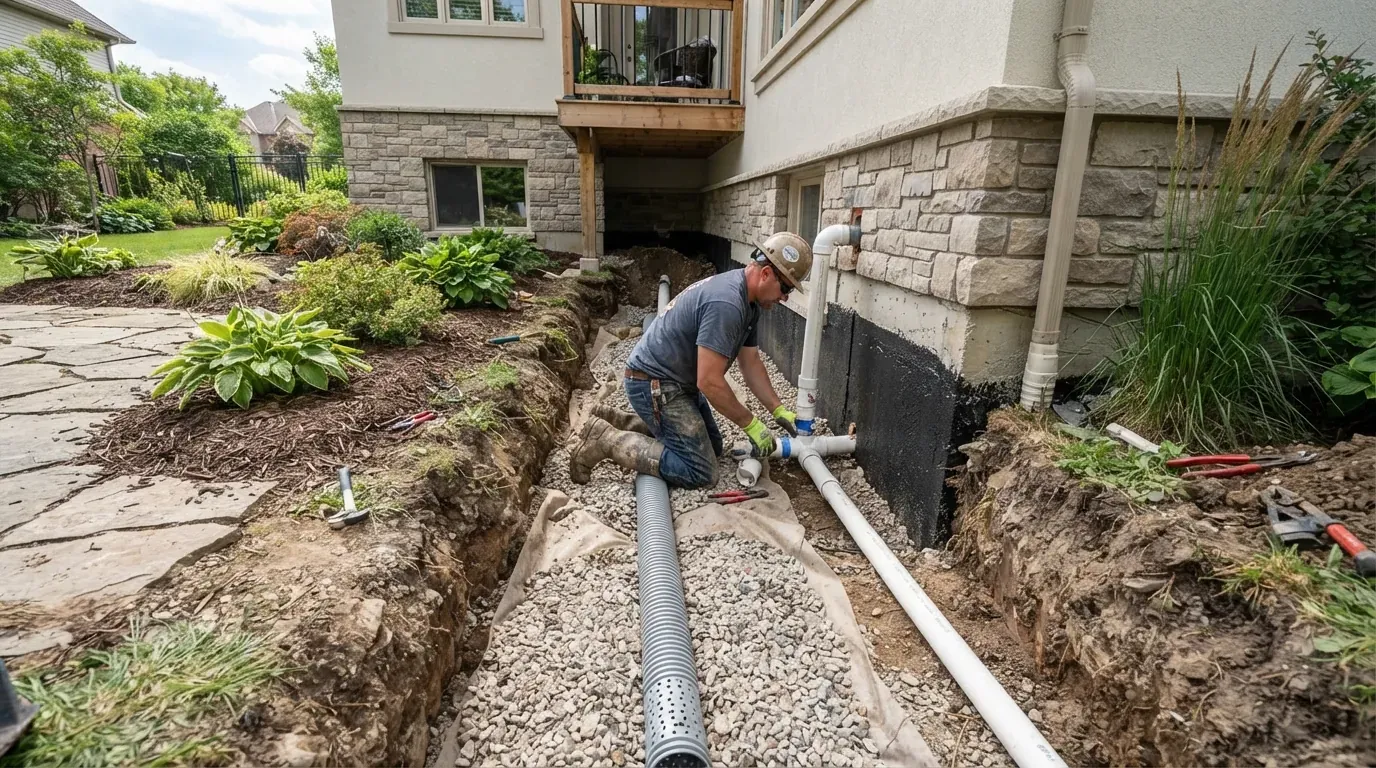
A service line runs from the water main in the street to your house. Ownership splits at the curb stop, the shutoff buried near the curb or sidewalk. The utility owns the run from the main to the curb stop. From the curb stop into the house, the pipe belongs to the property owner.
That means the section under your front yard is very often yours.
Utilities replace their own half under the federal programme. The private half is normally the property owner’s responsibility. Some Pennsylvania water utilities have programmes that cover or contribute to the customer-owned portion, and Pennsylvania does put significant infrastructure money into lead line replacement, but that funding is awarded to water systems rather than paid to homeowners directly. What that adds up to at your address depends on which utility serves you.
So the single most valuable call you can make is to your own water authority, asking two questions: what do your records show for my address, and what does your programme cover on the customer-owned side?
Who supplies your water
Lebanon County has a number of separate public water systems, and the answer to the question above differs between them. Your water bill names your supplier, which is the reliable way to check. Broadly:
- Lebanon city and several surrounding municipalities are supplied by the City of Lebanon Authority.
- Myerstown has its own borough water authority.
- Much of the western side of the county, including the Palmyra and Annville areas, is served by Pennsylvania American Water.
- Rural township properties are frequently on private wells, in which case there is no service line inventory and no utility programme. See our well and water treatment page.
If you are not sure, look at who bills you for water and start there.
Why partial replacement is discouraged
There is a tempting shortcut here: replace the visible bit inside the basement, leave the buried run, save the excavation.
Public health guidance advises against it. Cutting into a lead line disturbs the scale that has built up inside it over decades, and that disturbance can release lead into the water at higher levels than before, sometimes for weeks. A partially replaced line can leave a household worse off in the short term than leaving it alone would have.
The recommended approach is full replacement, both halves, ideally on the same day. In practice that means coordinating with your utility rather than simply booking a plumber, and it is worth asking the utility when their side is scheduled before committing to a date for yours.
Reasonable steps while you wait
Replacement takes scheduling, and in the meantime the usual guidance applies. Use cold water for drinking, cooking and preparing formula, because hot water picks up lead more readily. Run the tap for a while before drinking if the water has been standing for hours. If you use a filter, choose one certified to NSF/ANSI Standard 53 for lead reduction and keep to the cartridge replacement schedule, because an expired cartridge is not doing the job.
Your utility can also tell you whether it offers water testing for customers, and many do.
Getting the private side replaced
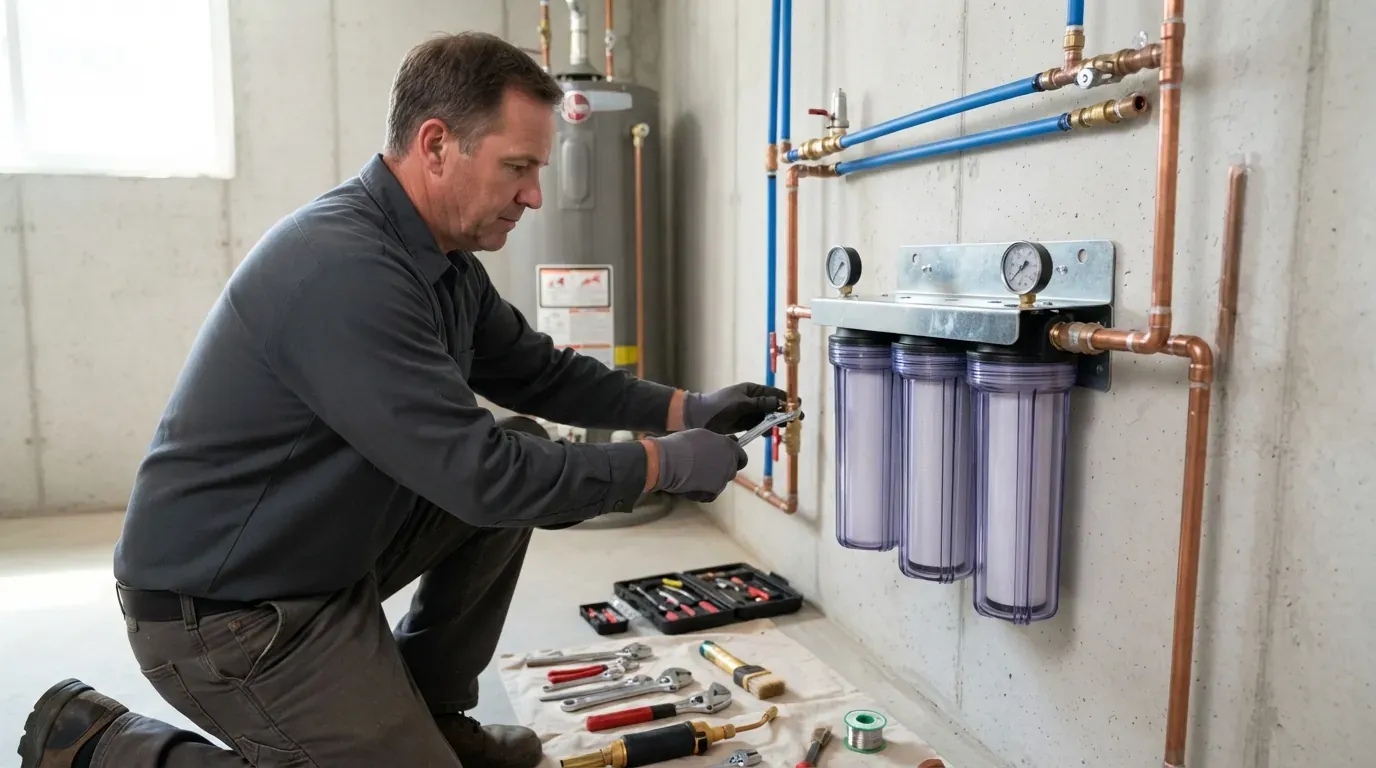
When you are ready to deal with the customer-owned portion, that is ordinary plumbing work, done by a licensed plumber. Our lead service line replacement page covers how the job is done and what the trenchless option depends on.
Tell us your ZIP and what you found on your pipe, and we will come and look at the line.
Sources
This guide draws on the following. Where we could not confirm a figure from a primary source, we have left it out rather than estimate.
- US EPA, Lead and Copper Rule Improvements
- US EPA, Protect Your Tap: A Quick Check for Lead
- City of Lebanon Authority
- Pennsylvania American Water, lead and drinking water
- Pennsylvania Infrastructure Investment Authority (PENNVEST), lead line replacement funding
This page is general information for homeowners, not legal, medical or engineering advice. For guidance about your specific address, contact your water authority.