
Drain & Sewer
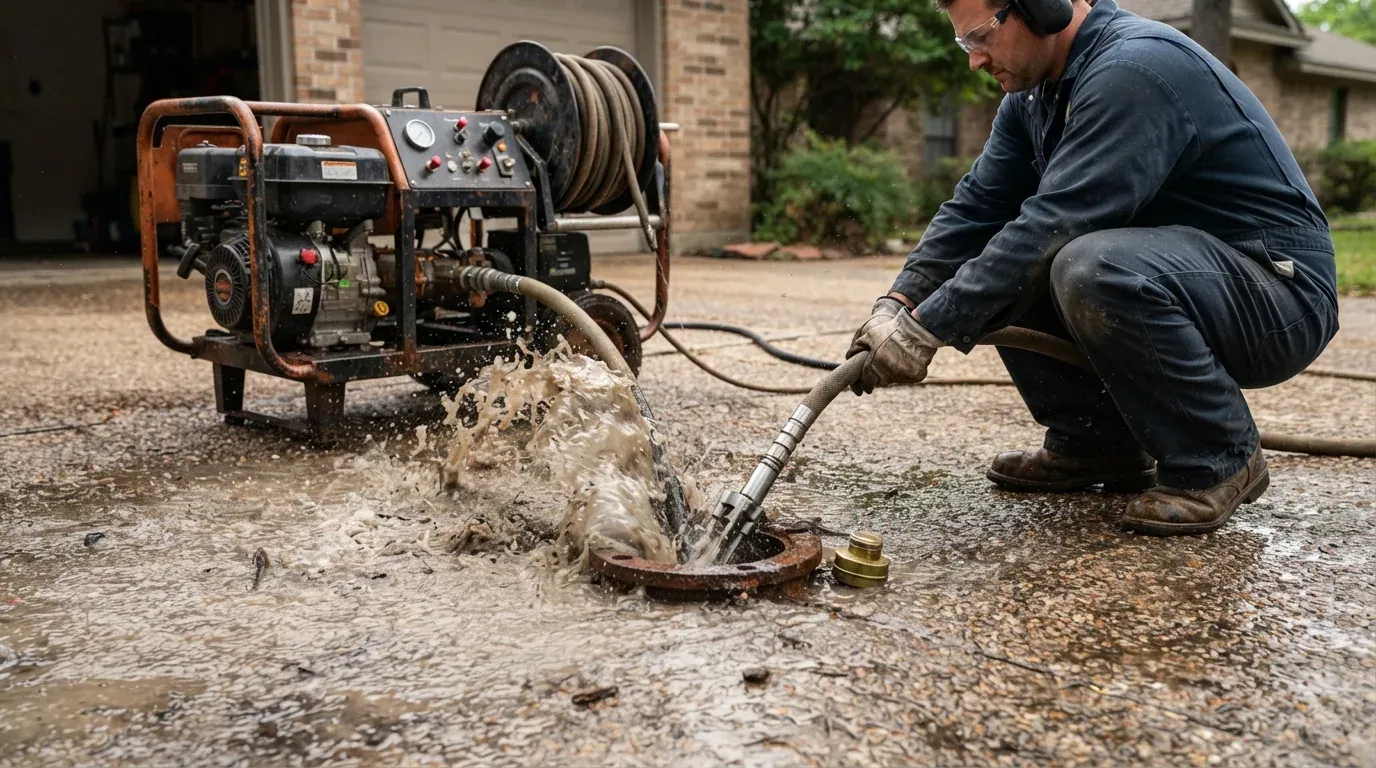
Hydro Jetting for Drains and Sewer Lines
Cabling opens a channel through a blockage. Jetting cleans the pipe wall back to full bore. The difference shows up in how long the line stays clear.
What is included
What this service covers
What we actually do on this job, and what you can expect us to deal with while we are there.
- Scouring grease, soap and scale off the full pipe wall
- Cutting fine root hair out of laterals
- Restoring long runs that have narrowed over years
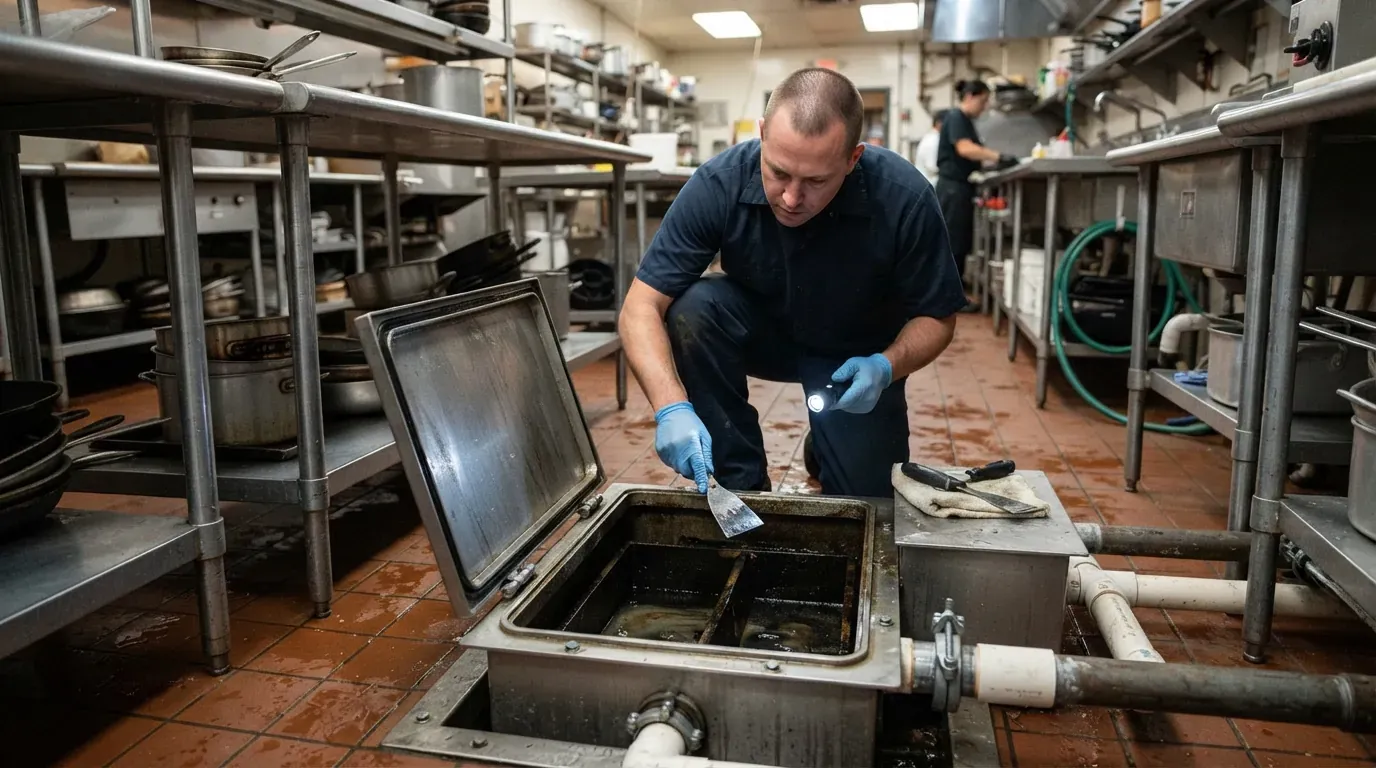
- Commercial kitchen waste lines and grease-heavy systems
- Clearing sand and silt out of lines with a low spot
- Post-jetting camera check to confirm the result
Signs to look for
You may need this if you are seeing any of these
- A line that has been cabled repeatedly and slows again quickly
- Drainage that is sluggish everywhere rather than blocked outright
- Recurring grease blockages in a commercial kitchen
- Camera footage showing heavy build-up on the pipe wall
- Multiple fixtures draining slowly on one shared run
Why it happens
What usually causes it
01
Years of grease laid down on the wall
Kitchen waste cools and deposits a layer that thickens gradually. Cabling bores a hole through it and leaves the rest, which is why flow returns and then disappears again quickly.
02
Hard water scale
The limestone groundwater across this county leaves mineral deposits that roughen the pipe wall and give grease and debris something to grip. Jetting removes that layer where a cable slides past it.
03
Fine root hair
Where roots have entered through an open joint, jetting cuts the fine growth back to the pipe wall far more completely than a cutting head alone.
04
Silt and sand in a low spot
A slight sag collects grit that cabling pushes around rather than removes. Jetting flushes it out of the line entirely.
Our approach
How we handle this job
Specific to this work rather than a generic checklist bolted onto every page.
01
Look before we jet
We camera the line first. High pressure water is the right tool for a fouled but sound pipe and the wrong tool for one that is already cracked, badly corroded or collapsing, and the only way to tell the difference is to look.
02
Match pressure and head to the pipe
Nozzle and pressure get chosen for the line's material, diameter and condition. Old cast iron and a modern PVC lateral are not treated the same way.
03
Work back towards the access point
Jetting pulls debris back towards the access rather than pushing it further down the system, so what comes off the wall leaves the line instead of forming the next blockage.
04
Confirm with the camera
A second camera pass shows what the wall looks like afterwards. It also frequently reveals the defect that the build-up was hiding, which is worth knowing before you plan anything else.
When jetting is the right call, and when it is not
Hydro jetting is genuinely better than cabling at one specific thing: taking a fouled pipe back to something close to its original bore. It is not a universal upgrade, and it is not worth paying for on a straightforward one-off clog.
The situations where it pays are recognisable. A line that has been cleared two or three times and keeps slowing. A whole house that drains sluggishly rather than one fixture that stops. A commercial kitchen where grease volume is the underlying issue. Camera footage showing the wall is coated rather than the pipe being blocked at a point.
If none of those describe you, a cable is the right tool and we will say so.
Why we camera first, without exception
High pressure water is very effective on a sound pipe and genuinely destructive on a failing one. Cast iron that has rusted down to a thin shell, or a lateral with an existing crack, can be made considerably worse.
The only way to know which you have is to look, so a camera pass comes first every time. Occasionally that inspection changes the recommendation entirely, and we end up talking about a repair rather than a clean. That is a good outcome, not a wasted trip.
The local factor
Groundwater across Lebanon County comes out of limestone and carries a heavy mineral load. That scale roughens the inside of pipework and gives grease and debris something to hold onto, so lines here foul faster than they would in a soft water area.
It is one of the reasons older properties in the county see repeat drain problems that seem out of proportion to how the drains are actually used.
Questions
Hydro jetting questions
Specific to this job. Every service page here has its own, none repeated.
General FAQCommon questions
What is the difference between hydro jetting and snaking a drain?
Can hydro jetting damage my pipes?
Is jetting worth it for a normal house?
How often should a commercial kitchen line be jetted?
Will jetting get rid of tree roots permanently?
Do you need access inside the house?
Is jetting messy?
Related services
- Drain cleaningClearing a drain is easy. Working out whether it will block again next month is the part that actually saves you money.
- Camera inspectionThe cheapest hour you can spend on a drain problem. It turns a guess about what is buried in your yard into a measured fact.
- Sewer line repairThe lateral from your house to the main is the property owner's responsibility in most Lebanon County municipalities. We inspect it before quoting it.
Ready when you are
Need hydro jetting in Lebanon County?
Tell us what is going wrong. We come out, look at it properly, and give you the price before anything starts.
- Licensed and insured
- Residential and commercial
- Price agreed before work starts
Talk to a plumber
Tell us what is going wrong and we will arrange a visit.
Rather not call? Request service online
Emergency callouts during business hours