
Bathroom & Kitchen
Toilet Repair and Replacement
A running toilet is one of the largest quiet water bills in a house, and it is usually a part costing very little.
What is included
What this service covers
What we actually do on this job, and what you can expect us to deal with while we are there.
- Running and phantom-filling toilets
- Fill valve, flapper and flush valve replacement
- Wax ring and flange repairs on leaking or rocking pans
- Blocked toilets and repeated blockages
- Cracked tanks and bowls, and full fixture replacement
- Loose or rocking pans and damaged closet flanges
- Commercial and flushometer toilets
Signs to look for
You may need this if you are seeing any of these
- Water running continuously or the tank refilling on its own
- A weak or incomplete flush needing a second go
- Water on the floor around the base
- The toilet rocking when you sit on it
- Repeated blockages in the same toilet
- Staining or a smell around the base that keeps returning
Why it happens
What usually causes it
01
A worn flapper
The single most common fault. The rubber flapper hardens with age and stops seating, so water passes from tank to bowl continuously. It is a cheap part and it can waste a genuinely large volume of water before anyone notices.
02
Fill valve failure
A fill valve that no longer shuts off cleanly causes constant refilling or overflow into the tube. Hard water shortens their life, which is worth knowing across this county.
03
A failed wax seal or flange
Water appearing at the base usually means the wax ring is no longer sealing or the closet flange underneath has corroded or broken. A rocking pan destroys the seal repeatedly until the flange is dealt with.
04
Something in the trapway
Repeated blockages in one toilet often mean an object lodged in the internal trapway rather than a drain problem, and no amount of plunging will clear it.
Our approach
How we handle this job
Specific to this work rather than a generic checklist bolted onto every page.
01
Identify the fault properly
Running, leaking at the base and blocking repeatedly are three different problems with three different fixes, and the internal parts are cheap enough that guessing is a waste of your money.
02
Repair with the correct parts
Flappers, fill valves and flush valves are matched to the fixture rather than approximated, which is what stops the fault returning in six months.
03
Deal with the flange properly
Where the pan is rocking or the seal has failed, the flange is fixed rather than packed out. Repeatedly renewing a wax ring on a broken flange is a repeat visit by design.
04
Say when replacement is better
A cracked bowl or tank, or a fixture where parts are no longer available, is a replacement. We will tell you which and let you decide.
The cheapest fix in plumbing, usually
Toilet faults have a reputation for being trivial, and mostly they are. A flapper or a fill valve is an inexpensive part, and the repair is quick.
What makes them worth attending to is the quiet cost. A toilet that runs continuously wastes a remarkable volume of water, and because it makes almost no noise and creates no mess, it can go on for months. Plenty of people who call us about an unexplained water bill turn out to have exactly this.
The food colouring test settles it in twenty minutes: a few drops in the tank, no flushing, and if colour shows up in the bowl the flapper is passing.
The one that is not trivial
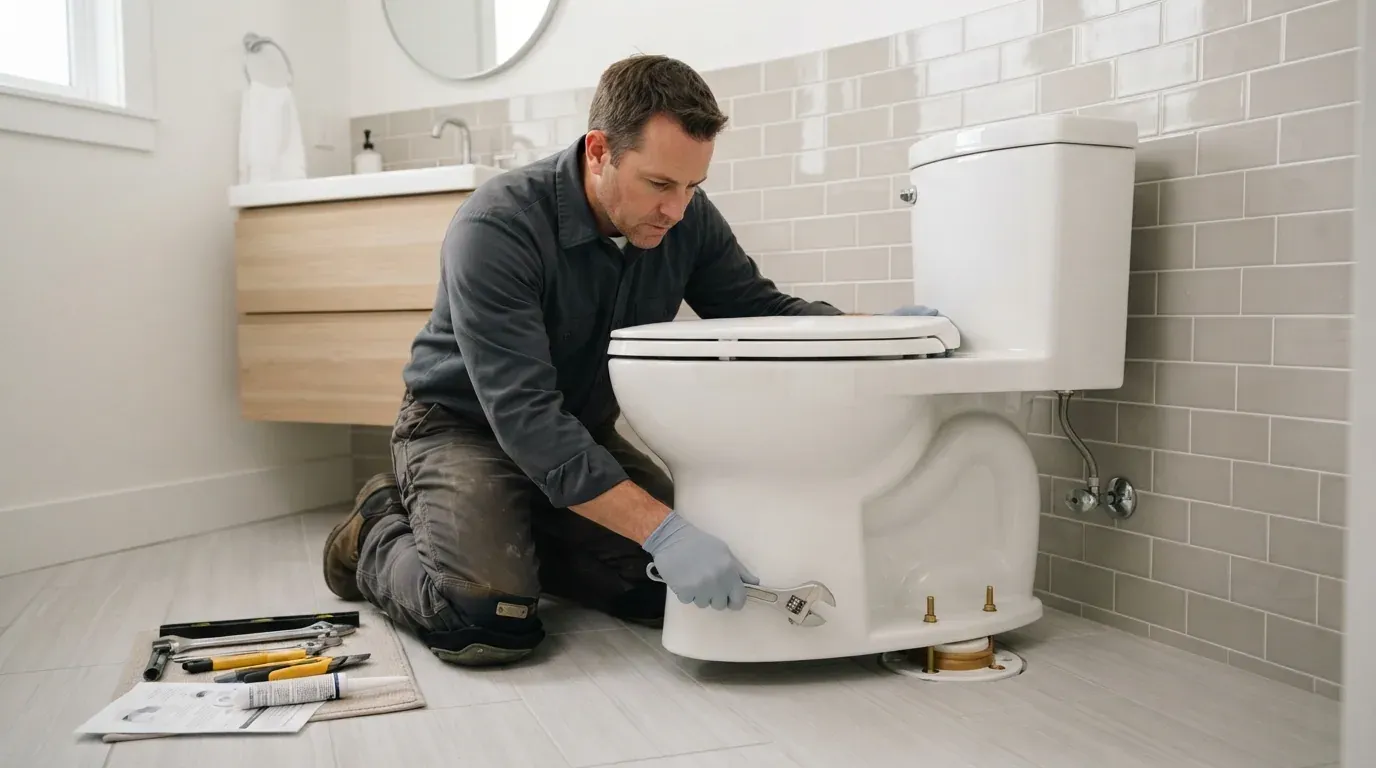
Water appearing around the base is a different matter. It usually means the wax seal has failed or the flange underneath has broken, and every flush is then putting a little waste water into the subfloor rather than into the drain.
That is worth dealing with properly rather than mopping up, because the damage accumulates out of sight. Where the pan rocks, the flange is almost always the underlying issue, and simply fitting another wax ring is a repeat visit waiting to happen.
Hard water, again
The limestone groundwater across this county is hard on the working parts inside a tank. Fill valves and flappers scale up and stiffen faster here than in softer water areas, which is why toilets in Lebanon County tend to need their internals sooner than the manufacturer’s expectations suggest.
Questions
Toilet repair questions
Specific to this job. Every service page here has its own, none repeated.
General FAQCommon questions
Why does my toilet keep running?
How can I tell if my toilet is leaking silently?
There is water around the base of my toilet. What does that mean?
My toilet rocks slightly. Is that a problem?
Why does only this one toilet keep blocking?
Is it worth repairing an old toilet or should I replace it?
Do you work on commercial toilets and flushometers?
Related services
- Faucet and sink repairSmall fixture jobs, done properly. Including the seized shutoff valve nobody mentions until it will not turn.
- Drain cleaningClearing a drain is easy. Working out whether it will block again next month is the part that actually saves you money.
- Emergency plumbingWhen water is coming in and you cannot stop it, the first ninety seconds matter more than who you call. Shut it off, then get us out.
- Garbage disposal repairHalf of dead disposals are a tripped reset or a jam. It is worth knowing which before anyone charges you for a new one.
Ready when you are
Need toilet repair in Lebanon County?
Tell us what is going wrong. We come out, look at it properly, and give you the price before anything starts.
- Licensed and insured
- Residential and commercial
- Price agreed before work starts
Talk to a plumber
Tell us what is going wrong and we will arrange a visit.
Rather not call? Request service online
Emergency callouts during business hours