
Water Heaters
Water Heater Repair
Plenty of water heater faults are a part, not a tank. Knowing which you have before spending anything is the whole job.
What is included
What this service covers
What we actually do on this job, and what you can expect us to deal with while we are there.
- No hot water and not enough hot water diagnosis
- Thermocouple, pilot assembly and gas valve faults
- Electric heating elements and thermostats
- Temperature and pressure relief valve replacement
- Anode rod replacement and tank flushing
- Noisy tanks caused by sediment
- Correcting venting, expansion and relief discharge faults
Signs to look for
You may need this if you are seeing any of these
- No hot water at any tap
- Hot water that runs out much faster than it used to
- Rumbling, popping or kettling noises from the tank
- Rusty or discoloured hot water
- A rotten egg smell from the hot side only
- Water pooling around the base of the unit
- The pilot light going out repeatedly
Why it happens
What usually causes it
01
Sediment on the tank bottom
Hard water drops mineral out of solution as it heats. That layer insulates the burner from the water, so the unit runs longer for the same result and the popping noise is water flashing to steam underneath it. It is the single most common cause of premature failure in this county.
02
A spent anode rod
The anode is a sacrificial part that corrodes so the tank does not. Once it is consumed the tank itself starts going, which shows up first as rusty hot water or a sulphur smell. Replacing it on time is what makes the difference between eight years and fifteen.
03
Failed thermocouple or element
On a gas heater a failing thermocouple lets the pilot drop out repeatedly. On an electric one, scale kills the lower element first, which typically gives you some hot water but far less than usual.
04
Thermostat drift
A thermostat reading incorrectly gives water that is either lukewarm or dangerously hot, and it is a cheap part rather than a reason to replace a working tank.
Our approach
How we handle this job
Specific to this work rather than a generic checklist bolted onto every page.
01
Establish the age first
There is a date encoded in the serial number on the label. It changes the whole conversation, because money spent on a fourteen year old tank rarely comes back and we would rather tell you that before you spend it.
02
Find where the water actually is
Leaks from top fittings, the drain valve or the relief discharge are repairable parts. Water emerging from under the jacket with everything above dry means the steel tank has corroded through, and no repair exists for that.
03
Test the actual fault
Gas heaters get the pilot, thermocouple, gas valve and venting checked. Electric ones get elements and thermostats tested rather than swapped on a hunch.
04
Give you the honest comparison
Where a repair is sensible we do it. Where the repair cost is a large fraction of replacement on a tank near the end of its life, we will say so and let you decide rather than quietly fitting the part.
The two questions that settle most water heater calls
Before anyone comes out, you can usually work out which conversation you are going to have.
How old is it? There is a label on the unit with a serial number, and for most manufacturers the date is encoded in the first few characters, generally as year and week. Under eight years, a component fault is worth fixing. Past twelve, spending on it rarely pays.
Where is the water? This is the one people most often get wrong, because water tracks across a floor and appears somewhere other than its source. Water from the top fittings, the drain valve, or the relief valve discharge pipe means a repairable part. Water coming out from underneath the jacket, with everything above it dry, means the tank itself has rusted through.
Hard water is the local variable
Lebanon County sits on limestone, and that shapes water heater life here more than brand choice does.
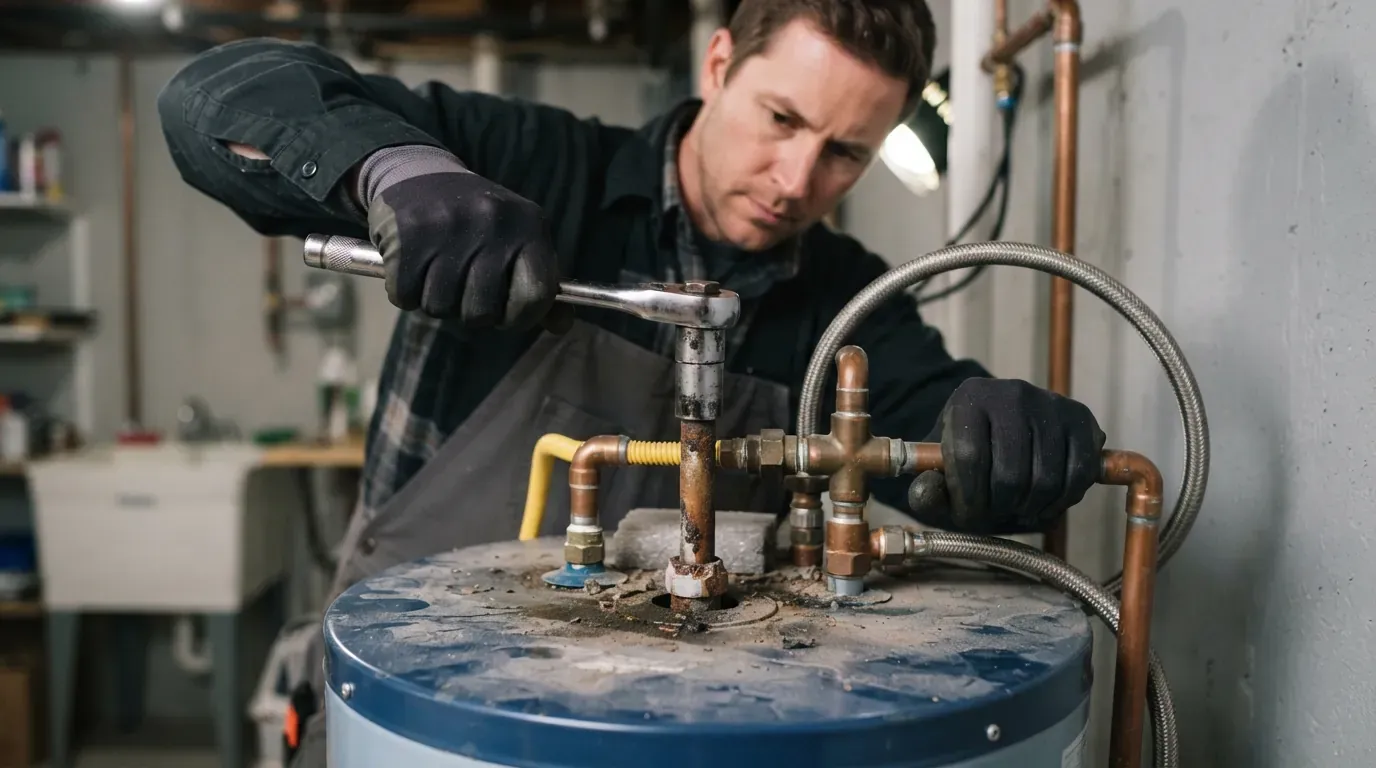
Dissolved mineral drops out of solution when water is heated and settles on the bottom of a gas tank or crusts onto the elements of an electric one. The insulating layer makes the burner work longer for the same result, and the popping noise on an older tank is water flashing to steam underneath it. On electric units, scale on an element is what burns the element out.
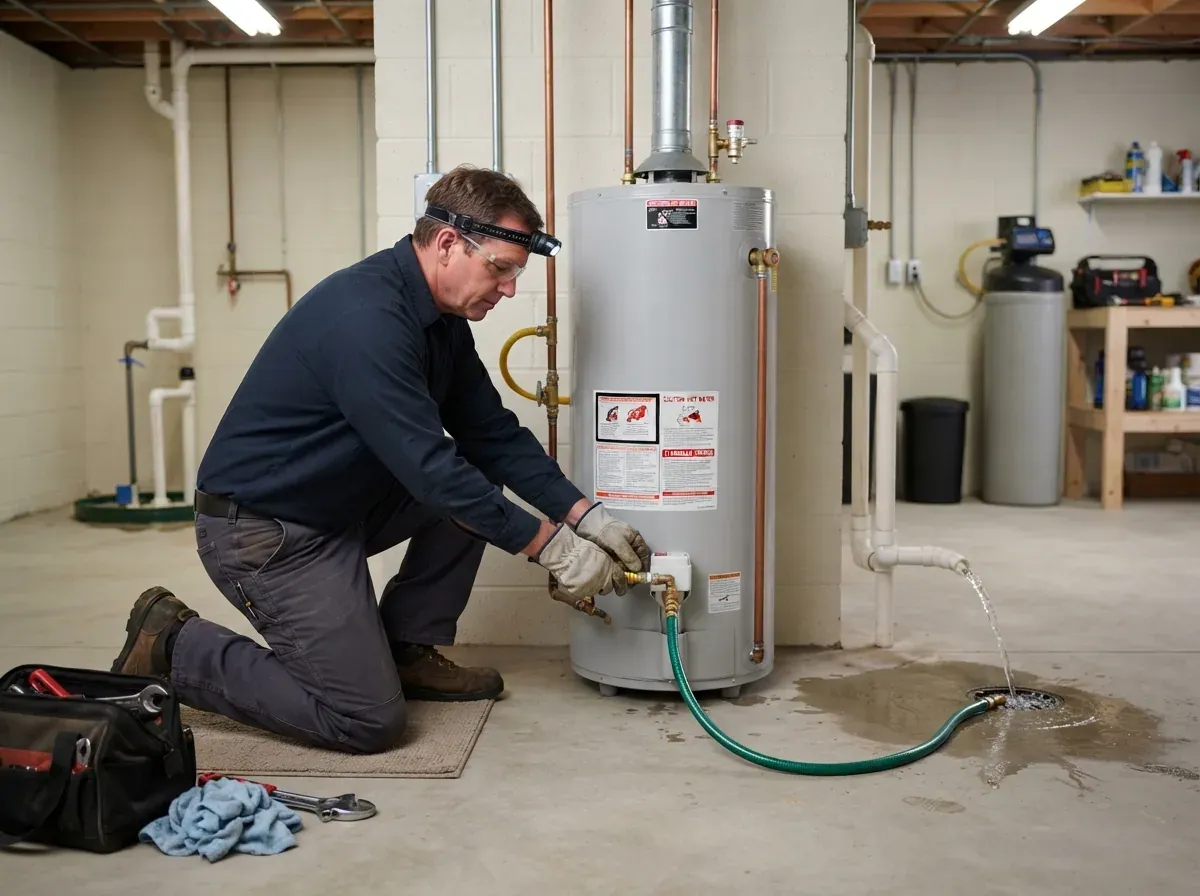
Two habits push back on this and neither is expensive: flush the tank annually, and check the anode rod every few years, replacing it once it is largely consumed. The anode is the part designed to corrode so the tank does not. Once it is gone, the tank is next.
Houses on private wells have a broader water chemistry question than hardness alone, which is covered on the well and water treatment page.
When we will tell you not to repair it
If the tank is leaking from the body, or if the repair cost on a twelve year old unit is a large fraction of replacing it, we will say so plainly. You are welcome to have the repair done anyway and sometimes that is the right call for timing or budget reasons, but you should be making that choice with the numbers in front of you rather than finding out in a year.
If it is time, the replacement page covers sizing and fuel choice.
Questions
Water heater repair questions
Specific to this job. Every service page here has its own, none repeated.
General FAQCommon questions
How do I know if my water heater needs repair or replacement?
Why is my water not getting hot at all?
Why does my hot water run out so quickly now?
What is that popping and rumbling noise?
Can you repair a tankless water heater?
How long does a water heater repair take?
My hot water smells of rotten eggs. Is that dangerous?
Should I flush my water heater myself?
Related services
- Water heater replacementA replacement is a chance to fix what was wrong with the original installation, not just to put the same thing back in the same place.
- Tankless water heatersTankless suits some houses very well and others badly. The deciding factors are gas capacity, venting and how you actually use hot water.
- Emergency plumbingWhen water is coming in and you cannot stop it, the first ninety seconds matter more than who you call. Shut it off, then get us out.
- Well pump and water treatmentOutside the boroughs, the pump, the pressure tank and the water chemistry are all yours. There is no utility to call when the pressure drops.
Ready when you are
Need water heater repair in Lebanon County?
Tell us what is going wrong. We come out, look at it properly, and give you the price before anything starts.
- Licensed and insured
- Residential and commercial
- Price agreed before work starts
Talk to a plumber
Tell us what is going wrong and we will arrange a visit.
Rather not call? Request service online
Emergency callouts during business hours