
Wells & Water Treatment
Well Pump Repair and Water Treatment
Outside the boroughs, the pump, the pressure tank and the water chemistry are all yours. There is no utility to call when the pressure drops.
What is included
What this service covers
What we actually do on this job, and what you can expect us to deal with while we are there.
- Submersible and jet pump diagnosis and replacement
- Pressure tank replacement and pressure switch adjustment
- Short cycling, weak pressure and loss of prime
- Water softeners sized to measured hardness
- Iron, manganese and sulphur odour treatment
- Sediment filtration, neutralisers and UV disinfection
- Plumbing work following a water test result
Signs to look for
You may need this if you are seeing any of these
- The pump switching on and off rapidly while a tap runs
- Weak pressure throughout the property
- No water at all, or water that stops and restarts
- Air spitting from taps, or cloudy and sandy water
- Orange, brown or black staining on fixtures and laundry
- A rotten egg smell from the water
- Scale on kettles and fixtures, and soap that will not lather
Why it happens
What usually causes it
01
A pressure tank that has lost its charge
The tank holds an air cushion that lets the pump deliver steady flow between cut in and cut out. When the bladder fails, that cushion goes and the pump hammers on and off every few seconds. It is the most common well call and it destroys pumps if left.
02
Pump or pressure switch failure
A worn pump loses capacity gradually, while a pressure switch out of adjustment or with burnt contacts causes erratic behaviour. Both present as pressure problems and need testing to separate.
03
Falling water level
Air spitting from taps, or water going cloudy and gritty, can mean the level has dropped near the pump intake. Running a pump dry damages it, so this is worth investigating rather than living with.
04
Groundwater chemistry
Limestone geology across this county produces hard water, and iron, manganese and hydrogen sulphide all appear in wells here. These are treatment questions rather than pump questions, and they need a test result before any equipment is chosen.
Our approach
How we handle this job
Specific to this work rather than a generic checklist bolted onto every page.
01
Read the cycling pattern first
Rapid on and off while a tap runs points at the pressure tank. Steady weak pressure, or a pump running without building pressure, points at the pump, the switch or the well. That distinction directs everything that follows.
02
Check the cheap things before the expensive ones
A tripped breaker, a failed pressure switch or a control box fault are all far cheaper than a pump, and all of them get missed by anyone who assumes the worst first.
03
Test the water before selling any treatment
We will not size a softener or a filter from a description of the symptoms. A certified lab test tells you what is actually in the water and at what concentration, and equipment gets chosen from that.
04
Install and set up properly
Pressure switch set correctly, tank pre-charge matched to the cut-in pressure, and treatment plumbed so filters and media can actually be serviced.
Who this applies to
Lebanon County splits fairly cleanly. Inside the city and the boroughs there are public systems: the City of Lebanon Authority serves Lebanon city and a number of surrounding municipalities, Myerstown has its own borough water authority, and Pennsylvania American Water serves much of the western side including the Palmyra and Annville areas.
Outside those service areas, across the rural townships, houses are generally on private wells. If that is you, there is no utility standing behind your water. The pump, the pressure tank, the plumbing and the quality of what comes out are all yours.
Short cycling is the call to make quickly
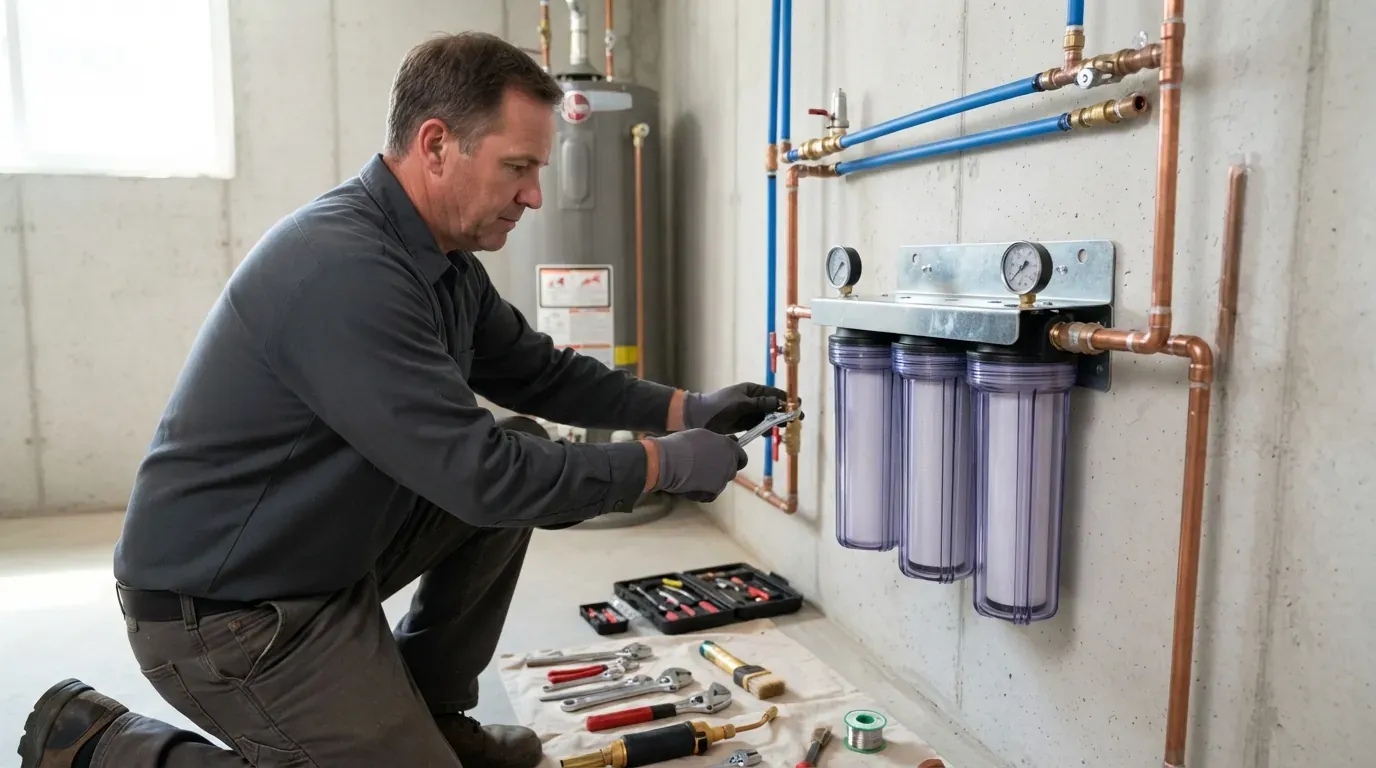
The single most common well problem, and the one most worth acting on, is a pump snapping on and off every few seconds while a tap runs.
The pressure tank is supposed to hold a cushion of air that lets the pump deliver steady flow between cut-in and cut-out. When the bladder fails or the charge is lost, that cushion disappears and the pump starts hammering. Every one of those rapid starts is wear, and a pump on a failed tank can be destroyed in a small fraction of its expected life.
It usually presents as an annoyance rather than an emergency, which is exactly why it gets left.
Test first, then treat
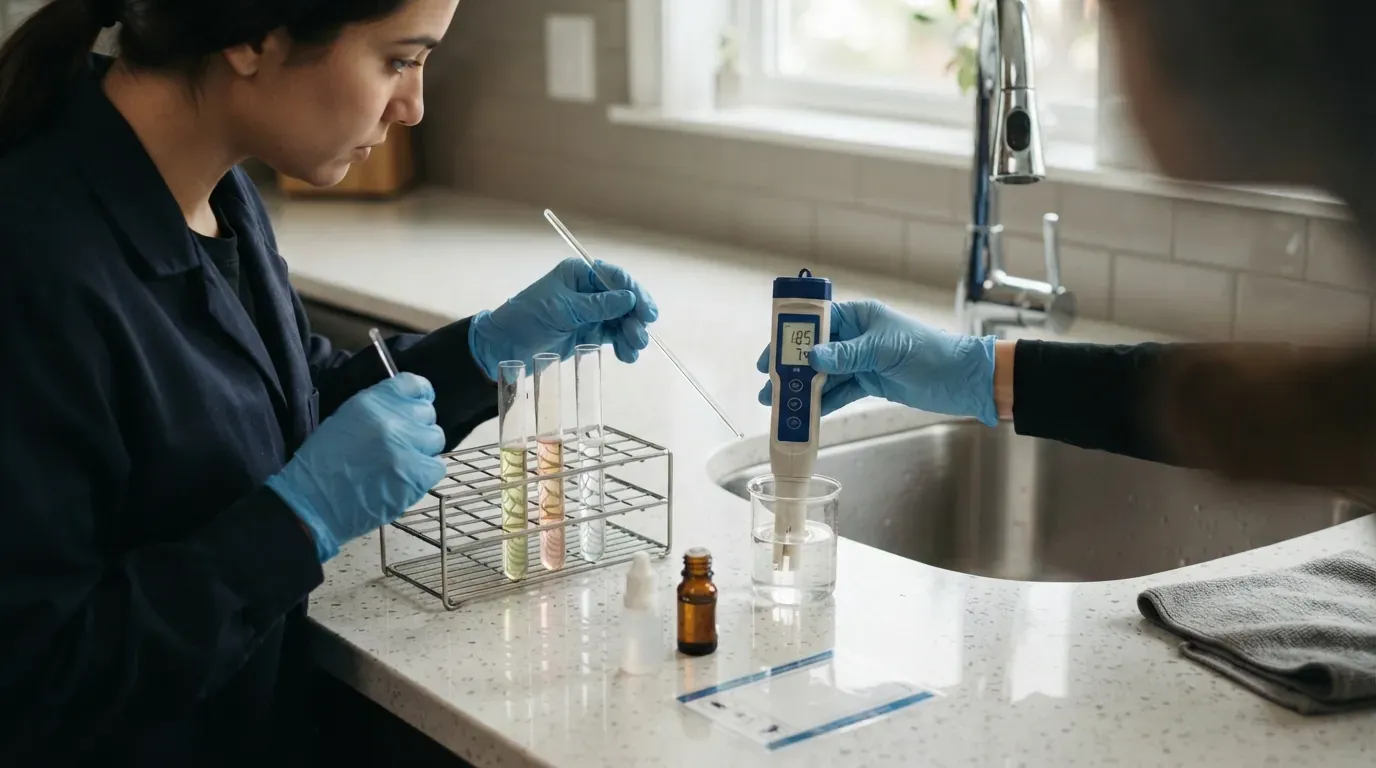
Water quality is a separate problem from water delivery, and the order of operations matters.
Hard water is widespread here because of the limestone geology, and iron, manganese and sulphur odour all turn up in wells around the county. Every one of those needs different equipment, and concentration decides what is appropriate.
We will not size a softener or a filter from a description of your symptoms. Get a certified lab test, read the result, then buy equipment that matches it. Penn State Extension and the Lebanon County Conservation District both publish guidance for Pennsylvania well owners on what to test for and how often, and bacteria is the one that gives no warning at all through taste or smell.
Questions
Well pump and water treatment questions
Specific to this job. Every service page here has its own, none repeated.
General FAQCommon questions
How do I know whether the problem is the pump or the pressure tank?
My water stopped completely. What should I check first?
Do I need a water softener?
My water stains everything orange. What is that?
How often should I test my well water?
How long does a well pump last?
Can you treat water for a house that is on public supply?
Should I test before buying a rural property?
Related services
- Water heater repairPlenty of water heater faults are a part, not a tank. Knowing which you have before spending anything is the whole job.
- Pipe repairOn older housing the real question is rarely how to patch this leak. It is whether the rest of that run is about to do the same thing.
- Leak detectionFinding the leak accurately is what keeps the repair small. Guessing is what turns one hole in a wall into three.
Ready when you are
Need well pump and water treatment in Lebanon County?
Tell us what is going wrong. We come out, look at it properly, and give you the price before anything starts.
- Licensed and insured
- Residential and commercial
- Price agreed before work starts
Talk to a plumber
Tell us what is going wrong and we will arrange a visit.
Rather not call? Request service online
Emergency callouts during business hours