
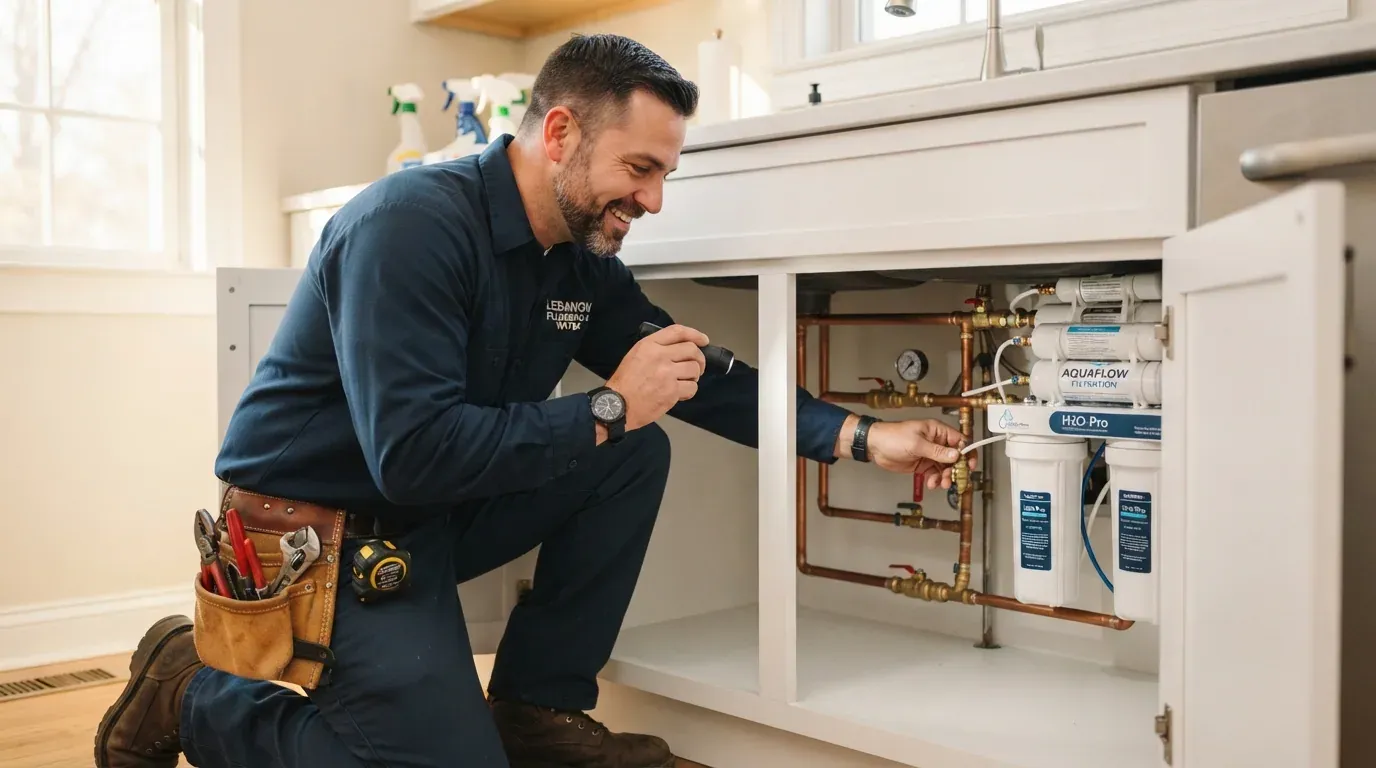
Water Heaters
Water Heater Installation and Replacement
A replacement is a chance to fix what was wrong with the original installation, not just to put the same thing back in the same place.
What is included
What this service covers
What we actually do on this job, and what you can expect us to deal with while we are there.
- Removing and disposing of the old unit
- Gas, electric and propane tank installation
- Conversion between fuel types where the services allow it
- Thermal expansion tanks on closed systems
- Correct temperature and pressure relief discharge piping
- Venting checked and corrected on gas installations
- Drain pans, shutoffs and isolation valves
- Commercial water heater replacement
Signs to look for
You may need this if you are seeing any of these
- Water pooling under the tank with everything above it dry
- A unit past ten or twelve years old needing another repair
- Never enough hot water for the household as it is now
- Rusty hot water that flushing has not resolved
- Repair quotes approaching the cost of a new unit
- Wanting the floor space back or a different fuel
Why it happens
What usually causes it
01
The tank has corroded through
Once the anode rod is spent, the steel tank starts corroding. A leak from the body is the end of that process and there is no repair for it, only replacement.
02
Sediment has taken the capacity
In a hard water area a tank that has never been flushed loses usable volume to mineral on the floor of the tank, and the burner is insulated from what is left. It behaves like a smaller, slower heater long before it leaks.
03
It was undersized from the start
The original was chosen for whoever lived there when it was installed. Households change, bathrooms get added, and a tank that was adequate in 2004 may simply not be enough now.
04
The installation was never right
Missing expansion tank on a closed system, relief valve discharge piped incorrectly, or poor venting. These get inherited from one replacement to the next unless someone stops and corrects them.
Our approach
How we handle this job
Specific to this work rather than a generic checklist bolted onto every page.
01
Size it for the household you have
How many people draw hot water in the morning and over what window, whether there is a large tub, and whether another bathroom is likely. Copying the old capacity is the default, not the right answer.
02
Check the fuel question honestly
If the existing unit is electric and gas is already at the property, the running cost comparison is worth doing. If it is not, we will say so rather than sell a conversion that never pays back.
03
Correct what the old install got wrong
Closed systems need a thermal expansion tank, and older installations frequently lack one. Relief valve discharge needs to be piped correctly. Gas venting gets checked properly rather than reconnected.
04
Remove, install, test and take the old one away
The old unit leaves with us. The new one is filled, purged, tested under load and set to a sensible temperature before we go.
A replacement is a chance to fix the original mistakes
Most water heaters get swapped like for like. Same capacity, same fuel, same pipework, same faults carried forward. That is the fast way to do it and it is why some houses have had the same underlying problem through three units.
Two things are worth stopping for.
Thermal expansion. If there is a pressure reducing valve or a backflow preventer on your incoming supply, your plumbing is a closed system. Heated water expands and, with nowhere to go, drives pressure up on every cycle. That stresses the new tank, the relief valve and every fitting in the house. The fix is an expansion tank, and a great many older installations here do not have one.
Relief valve discharge. The temperature and pressure relief valve needs its discharge pipe run correctly, terminating where a discharge would be noticed and would not scald anyone. It is one of the most commonly wrong details found on existing installations.
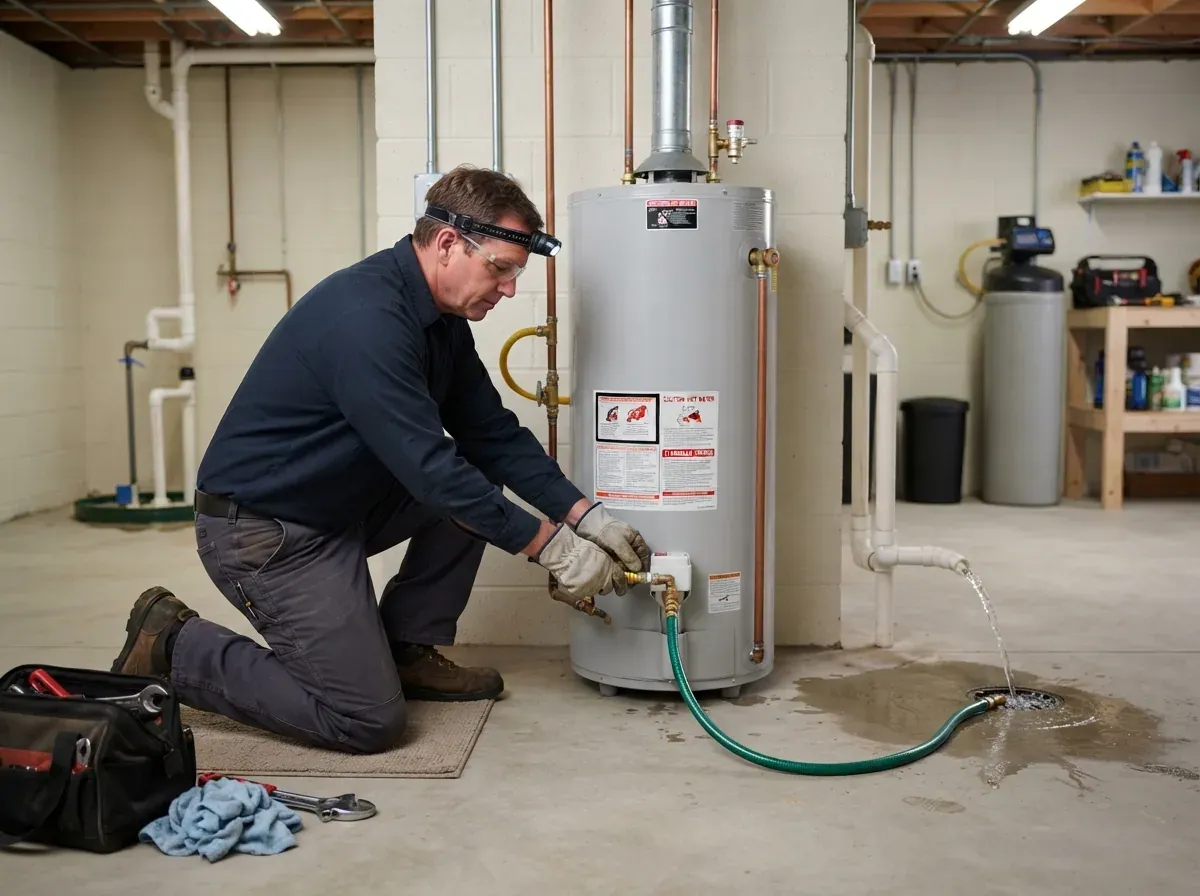
Sizing, rather than copying
The old unit was sized for whoever lived in the house when it went in. If your household has grown, if a bathroom has been added, or if you have simply been living with running out of hot water on a Sunday morning, matching the old capacity just buys the same problem again.
The measure that matters is peak demand: how much hot water gets drawn in the same hour, not how big the house is.
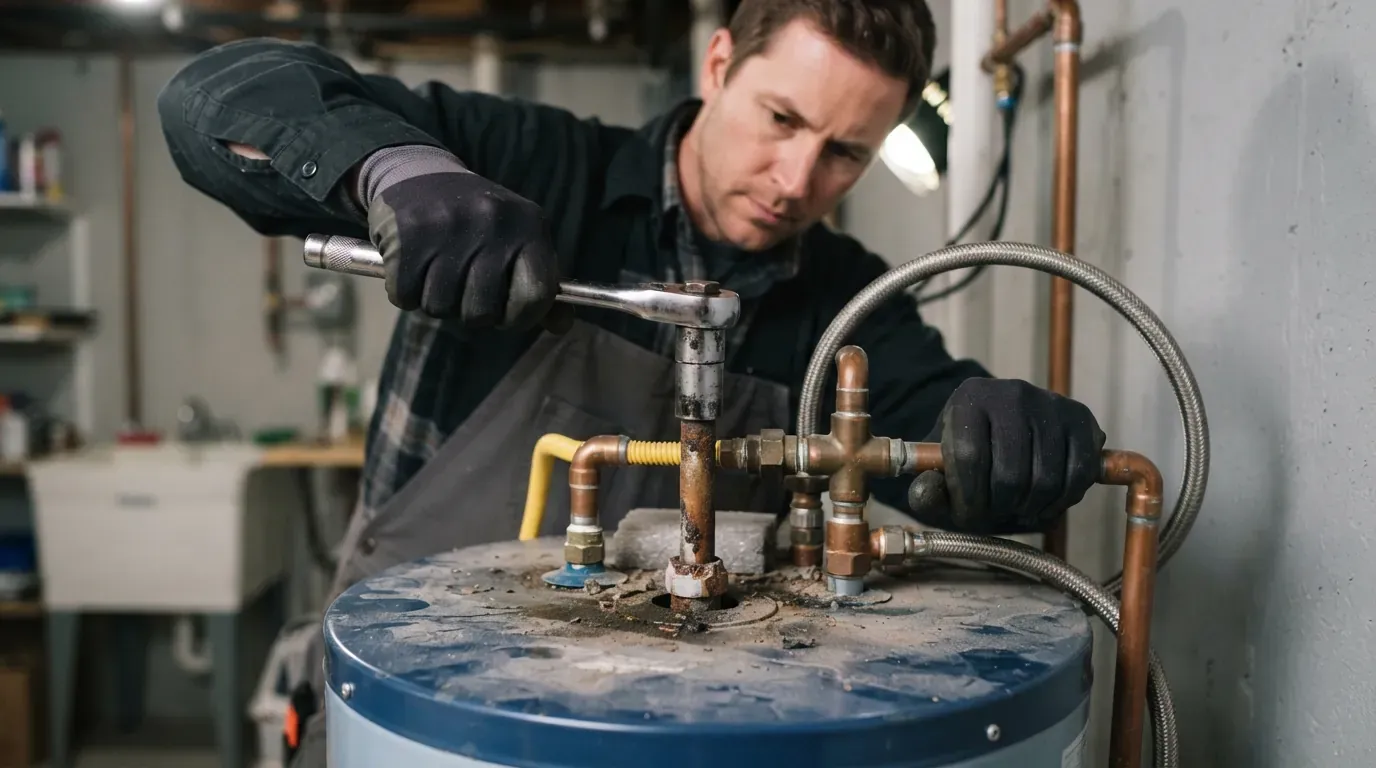
Hard water, again
The county’s limestone geology means mineral-heavy water, and that is what determines how long a tank lasts here. Sediment on the tank floor insulates the burner and takes up volume; scale on an electric element is what burns it out.
Annual flushing and timely anode rod replacement are genuinely the difference between eight years and fifteen. We will set the new unit up so both are straightforward to do rather than awkward.
Questions
Water heater replacement questions
Specific to this job. Every service page here has its own, none repeated.
General FAQCommon questions
What size water heater do I actually need?
Should I switch to tankless while I am replacing it?
How long does a water heater replacement take?
What is a thermal expansion tank and do I need one?
Can you replace a water heater in a tight basement or crawl space?
Do you take the old water heater away?
Will a new water heater lower my bills?
How long should a new one last here?
Related services
- Water heater repairPlenty of water heater faults are a part, not a tank. Knowing which you have before spending anything is the whole job.
- Tankless water heatersTankless suits some houses very well and others badly. The deciding factors are gas capacity, venting and how you actually use hot water.
- Well pump and water treatmentOutside the boroughs, the pump, the pressure tank and the water chemistry are all yours. There is no utility to call when the pressure drops.
- Emergency plumbingWhen water is coming in and you cannot stop it, the first ninety seconds matter more than who you call. Shut it off, then get us out.
Ready when you are
Need water heater replacement in Lebanon County?
Tell us what is going wrong. We come out, look at it properly, and give you the price before anything starts.
- Licensed and insured
- Residential and commercial
- Price agreed before work starts
Talk to a plumber
Tell us what is going wrong and we will arrange a visit.
Rather not call? Request service online
Emergency callouts during business hours