
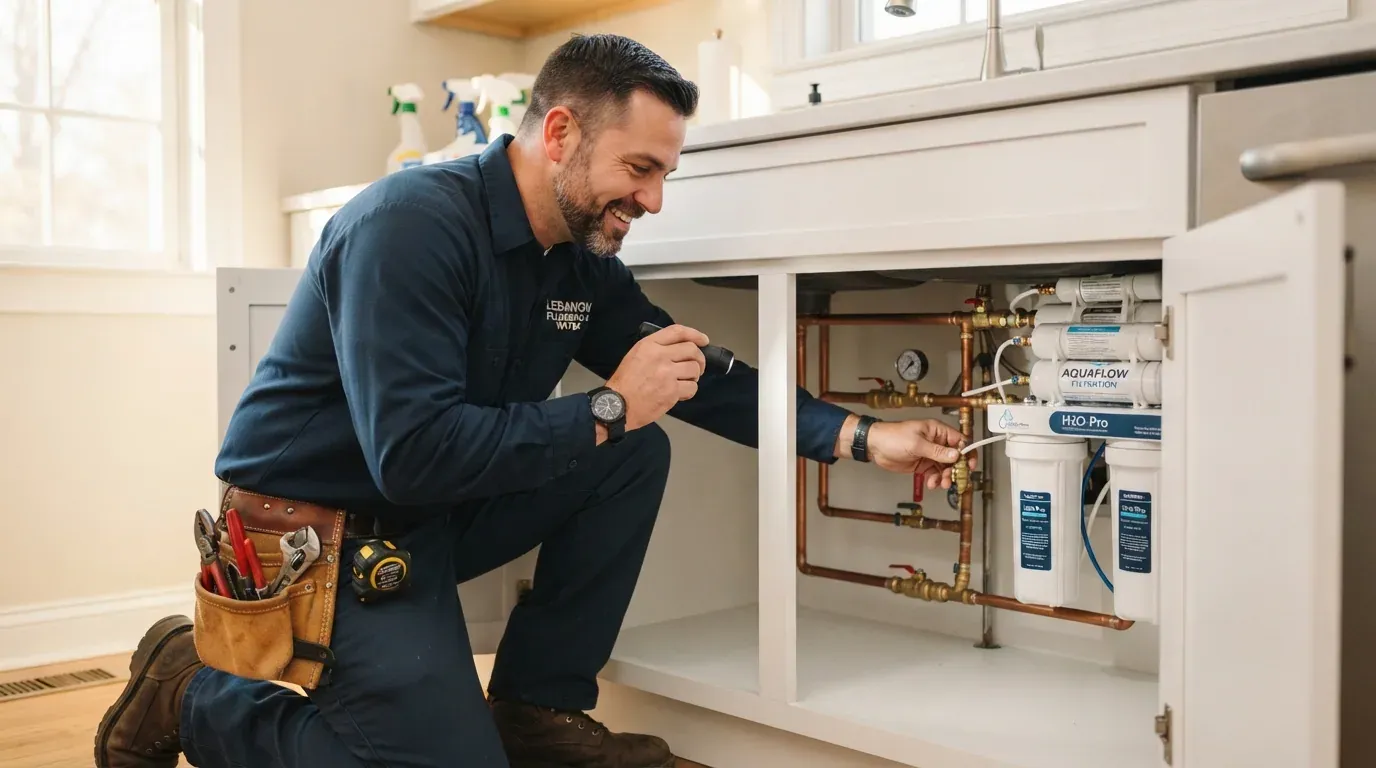
Water Heaters
Tankless Water Heater Installation and Service
Tankless suits some houses very well and others badly. The deciding factors are gas capacity, venting and how you actually use hot water.
What is included
What this service covers
What we actually do on this job, and what you can expect us to deal with while we are there.
- Assessing whether a property can support a tankless unit
- New tankless installation and tank to tankless conversion
- Gas line sizing and upgrades where required
- Dedicated venting to manufacturer specification
- Annual descaling and flush service
- Ignition, flow sensor and error code diagnosis
- Isolation valve kits so future servicing is straightforward
Signs to look for
You may need this if you are seeing any of these
- Running out of hot water with back to back showers
- Wanting the floor space a tank occupies
- A tank at the end of its life and considering the alternative
- Cold water sandwich, a burst of cold mid shower on an existing tankless
- An existing tankless throwing error codes or dropping out under load
- Reduced flow from a tankless that has never been descaled
Why it happens
What usually causes it
01
Scale in the heat exchanger
The single biggest issue with tankless in this county. Limestone groundwater deposits mineral inside the narrow passages of the exchanger, which reduces output and eventually triggers faults. Manufacturers' generic service intervals assume softer water than we have here.
02
Undersized gas supply
A tankless unit draws far more gas at peak than a tank does. A line sized for a tank, a furnace and a range often cannot support one without an upgrade, and ignoring this produces a unit that underperforms and faults.
03
Wrong sizing for simultaneous demand
Tankless is rated in flow at a given temperature rise. Pennsylvania groundwater is cold in winter, so the rise required is larger and the achievable flow lower. A unit sized on summer assumptions disappoints in January.
04
Venting not to specification
These units need their own correctly specified venting. Reusing an old flue is not acceptable and is a genuine safety issue on a gas appliance.
Our approach
How we handle this job
Specific to this work rather than a generic checklist bolted onto every page.
01
Check whether the property suits it
Gas meter and line capacity, venting route, electrical supply, water hardness and how the household actually uses hot water. If the answer is that a tank serves you better, we will say so before you spend anything.
02
Size on winter, not summer
We size for the temperature rise needed in the coldest part of the year and for the fixtures you genuinely run at the same time, rather than to a headline flow figure.
03
Install properly
Correct gas sizing, manufacturer-specified venting, condensate handling where applicable, and isolation valves fitted so descaling is a routine job rather than a strip down.
04
Set up the service routine
We flush and descale at commissioning and tell you the realistic interval for this water, which is usually more frequent than the manual suggests.
The honest assessment first
Tankless is genuinely better for some households and a poor investment for others, and the difference is not subtle. We would rather work that out before you commit than install something that disappoints you.
The things that decide it are practical: whether your gas meter and line can deliver peak demand, whether a compliant vent route exists, how cold your incoming water gets, and whether you actually run multiple hot water draws at the same time.
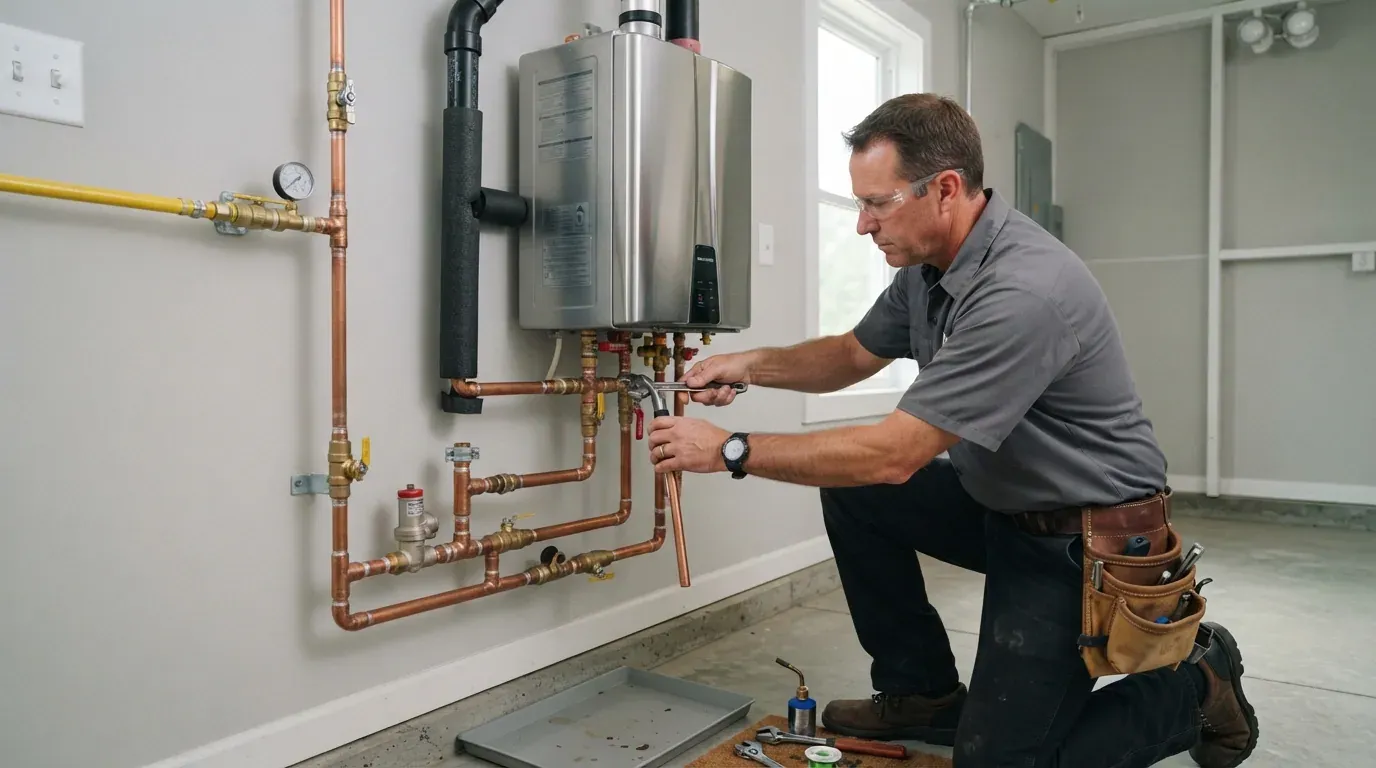
Hard water is the catch nobody mentions
The county’s limestone groundwater is the single biggest factor in how a tankless unit performs here over time. Mineral deposits inside the narrow passages of the heat exchanger, reducing output and eventually causing faults.
Manufacturer service intervals are written for average water. Ours is harder than average, so descaling needs to happen more often than the manual implies. We fit isolation valves as standard specifically so that job stays simple, because a unit that is awkward to service is one that never gets serviced.
If your house is on a well with high hardness, treating the water is worth considering alongside the heater rather than afterwards. That is covered on the well and water treatment page.
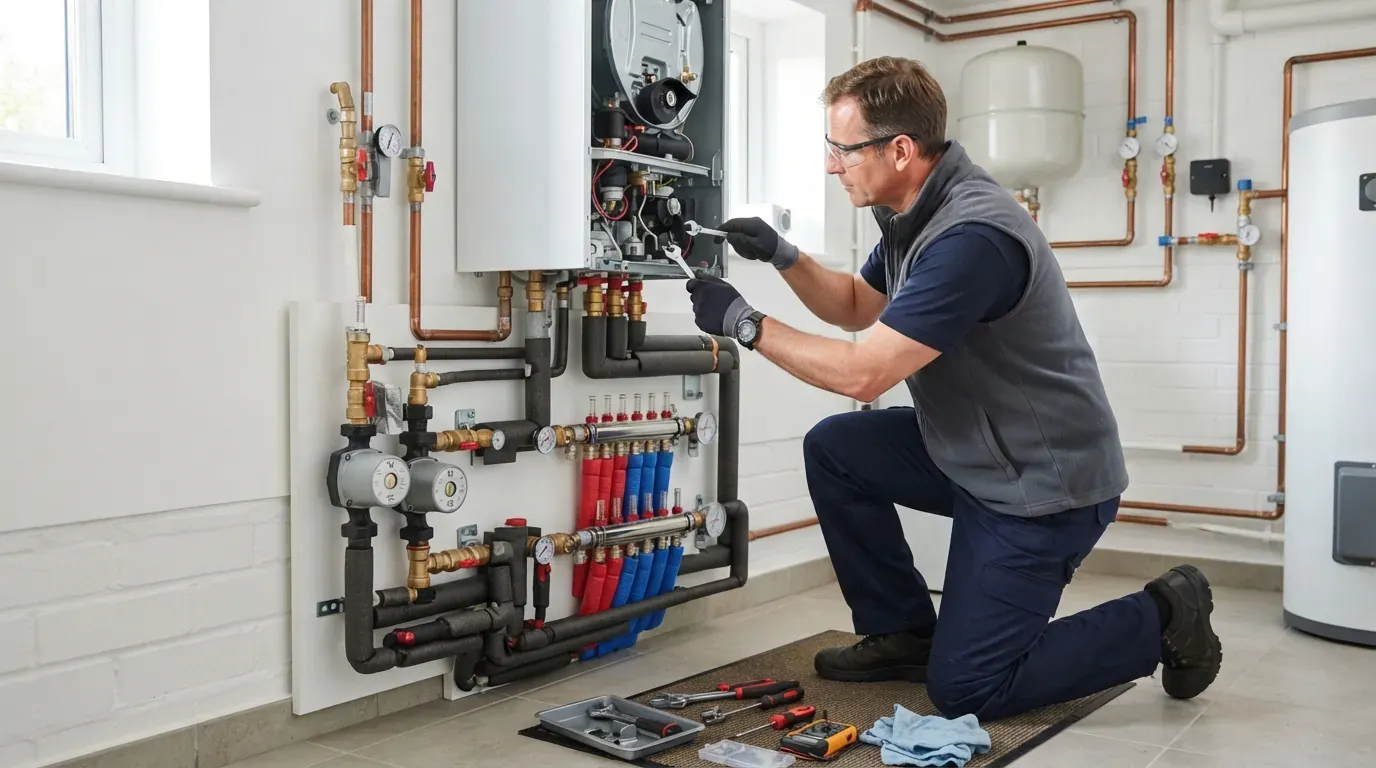
Sizing for a Pennsylvania winter
The number on the box assumes a modest temperature rise. In January, incoming groundwater here is cold, the rise required is large, and the flow the unit can actually deliver at your target temperature drops.
Sizing on that basis rather than on the headline figure is the difference between a unit that satisfies the household and one that causes an argument every winter morning.
Questions
Tankless water heaters questions
Specific to this job. Every service page here has its own, none repeated.
General FAQCommon questions
Is a tankless water heater worth it in Lebanon County?
Will a tankless unit really give me endless hot water?
What is the cold water sandwich?
How often does a tankless heater need descaling?
Do I need to upgrade my gas line?
Can I put a tankless unit where my tank is now?
How long do tankless water heaters last?
Related services
- Water heater replacementA replacement is a chance to fix what was wrong with the original installation, not just to put the same thing back in the same place.
- Water heater repairPlenty of water heater faults are a part, not a tank. Knowing which you have before spending anything is the whole job.
- Well pump and water treatmentOutside the boroughs, the pump, the pressure tank and the water chemistry are all yours. There is no utility to call when the pressure drops.
Ready when you are
Need tankless water heaters in Lebanon County?
Tell us what is going wrong. We come out, look at it properly, and give you the price before anything starts.
- Licensed and insured
- Residential and commercial
- Price agreed before work starts
Talk to a plumber
Tell us what is going wrong and we will arrange a visit.
Rather not call? Request service online
Emergency callouts during business hours