
Leak Detection & Pipes
Lead and Galvanized Service Line Replacement
If your water authority wrote to you, the buried run from the curb stop into your house is the part you have to deal with.
What is included
What this service covers
What we actually do on this job, and what you can expect us to deal with while we are there.
- Replacing the customer-owned lead or galvanized run from curb stop to house
- Coordinating with the utility so both halves happen together
- Trenchless pulling where excavation would damage hardscape
- Replacing galvanized interior supply that is restricting flow
- Reconnecting the meter, main shutoff and pressure regulator
- Verifying pipe material where the utility's record says unknown
Signs to look for
You may need this if you are seeing any of these
- A letter from your water authority about service line material
- A dull grey pipe that scratches shiny silver and is not magnetic
- Grey threaded pipe that a magnet sticks to firmly
- Records showing your line material as unknown
- Poor flow throughout a house with original galvanized supply
- Buying or selling an older property with unverified pipe material
Why it happens
What usually causes it
01
The age of the connection
Lead service lines went in on connections made before the practice ended, so they concentrate in the older parts of the city and the borough cores rather than following the age of the house alone.
02
Galvanized downstream of lead
Galvanized steel that was ever fed by a lead line or lead gooseneck can absorb lead into its interior surface and keep releasing it afterwards, which is why inventories group it with lead.
03
Incomplete records
Utilities built their inventories from decades of patchy paperwork, so a large share of addresses came back as unknown. That is not a finding of lead, it means nobody has looked yet.
04
Federal replacement requirements
EPA rules require systems to inventory service lines, notify customers and replace lead ones, which is why letters went out across the county at the same time.
Our approach
How we handle this job
Specific to this work rather than a generic checklist bolted onto every page.
01
Verify what you actually have
We check the pipe where it enters the property and confirm the material, which resolves an unknown record without guesswork. If it turns out to be copper or plastic, we will tell you and there is nothing to do.
02
Establish who is doing which half
The utility replaces its side from the main to the curb stop. We contact them about scheduling so both halves can be done together rather than months apart.
03
Replace the full private side
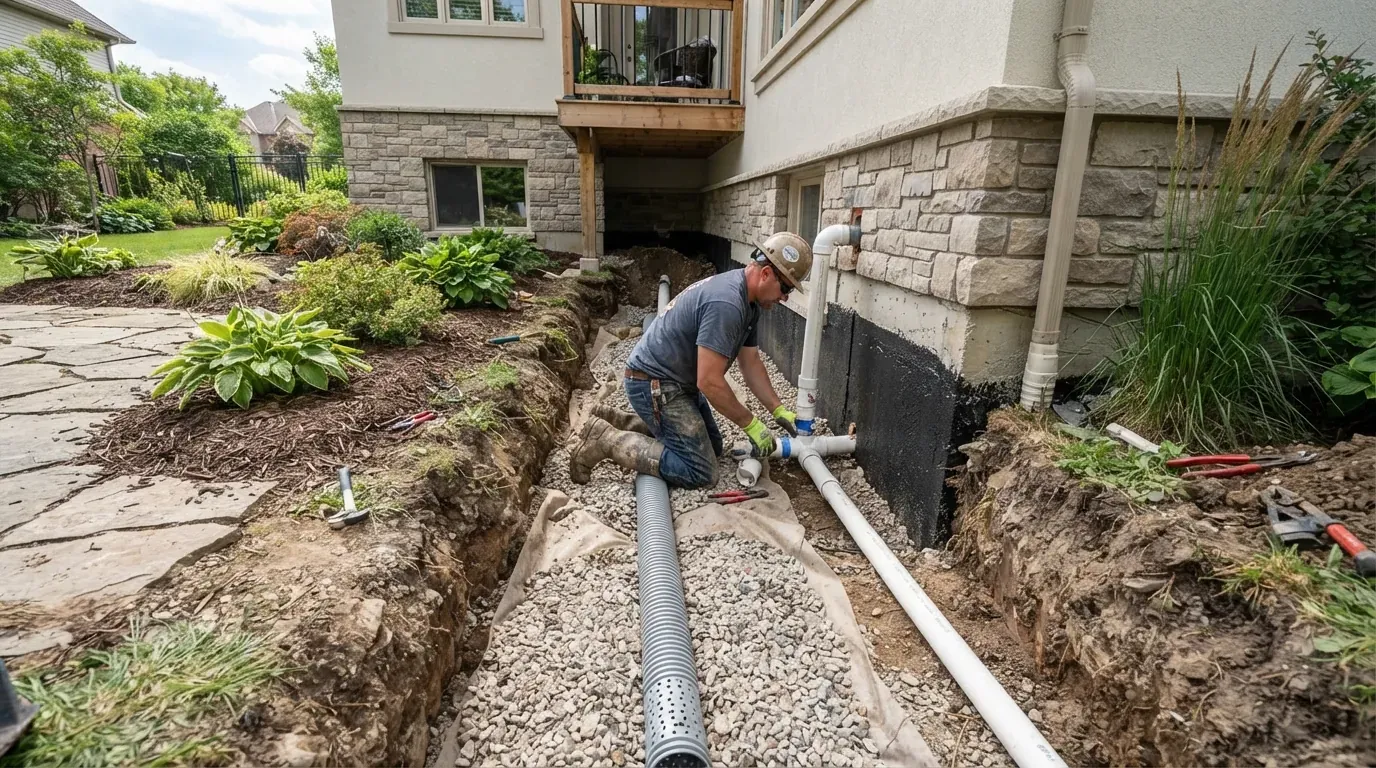
Open excavation or a trenchless pull depending on the run, the ground and what is on the surface. What we will not do is replace part of a lead line and leave the rest.
04
Reconnect, test and restore
Meter, main shutoff and any pressure regulator reconnected, the system flushed thoroughly, and the surface reinstated.
Why letters went out across the county at once
Federal drinking water rules require every public water system to inventory what its service lines are made of, tell customers what the records show, and replace the lead ones. The EPA’s timeline for systems nationally is to identify and replace lead pipes within about ten years, with a duty to tell people where lead pipes are and when replacement is planned.
Building those inventories meant going through decades of patchy records, which is why so many letters say “unknown” rather than naming a material.
Locally, the City of Lebanon Authority, which supplies Lebanon city and a number of surrounding municipalities, completed its inventory and wrote to affected customers, publishing service line information so people can look up their own address. Other systems serving the county have run the same process on their own schedules.

The half that is yours
Ownership splits at the curb stop, the shutoff buried near the curb or sidewalk. The utility owns the run from the main to that point. From there into the house is the property owner’s, which means the section under your own front yard is very often yours to deal with.
The utility replaces its side under the programme. Yours is the part that needs arranging, and it is the reason this page exists.
Full replacement, not partial
We will not cut into a lead line and leave the rest in the ground. Disturbing the interior scale of an old lead pipe can raise lead levels in the water for weeks afterwards, so a partial job can leave a household worse off than doing nothing.
That means talking to your water authority about when their half is scheduled, so both can happen together. It takes a little coordination and it is the correct way to do this work.
Before any of that, check your own pipe. Our guide to lead service lines in Lebanon County walks through the coin and magnet test and explains what the letter categories mean.
Questions
Lead service line replacement questions
Specific to this job. Every service page here has its own, none repeated.
General FAQCommon questions
My water authority sent me a letter. Does that mean I have lead pipes?
Who pays to replace a lead service line, the utility or me?
Can I just replace the part inside the house and leave the buried pipe?
How do I check the material myself?
Will replacing it dig up my whole yard?
Is there funding to help with the cost?
I rent. Whose problem is this?
Related services
- Water line repairThe buried run from the curb stop to your house belongs to you. When it fails, so does the whole property's water.
- Pipe repairOn older housing the real question is rarely how to patch this leak. It is whether the rest of that run is about to do the same thing.
- Leak detectionFinding the leak accurately is what keeps the repair small. Guessing is what turns one hole in a wall into three.
- Slab leak repairA leak under a concrete floor is worth finding accurately, because the difference between one small opening and a broken-up floor is entirely about location work.
Ready when you are
Need lead service line replacement in Lebanon County?
Tell us what is going wrong. We come out, look at it properly, and give you the price before anything starts.
- Licensed and insured
- Residential and commercial
- Price agreed before work starts
Talk to a plumber
Tell us what is going wrong and we will arrange a visit.
Rather not call? Request service online
Emergency callouts during business hours