
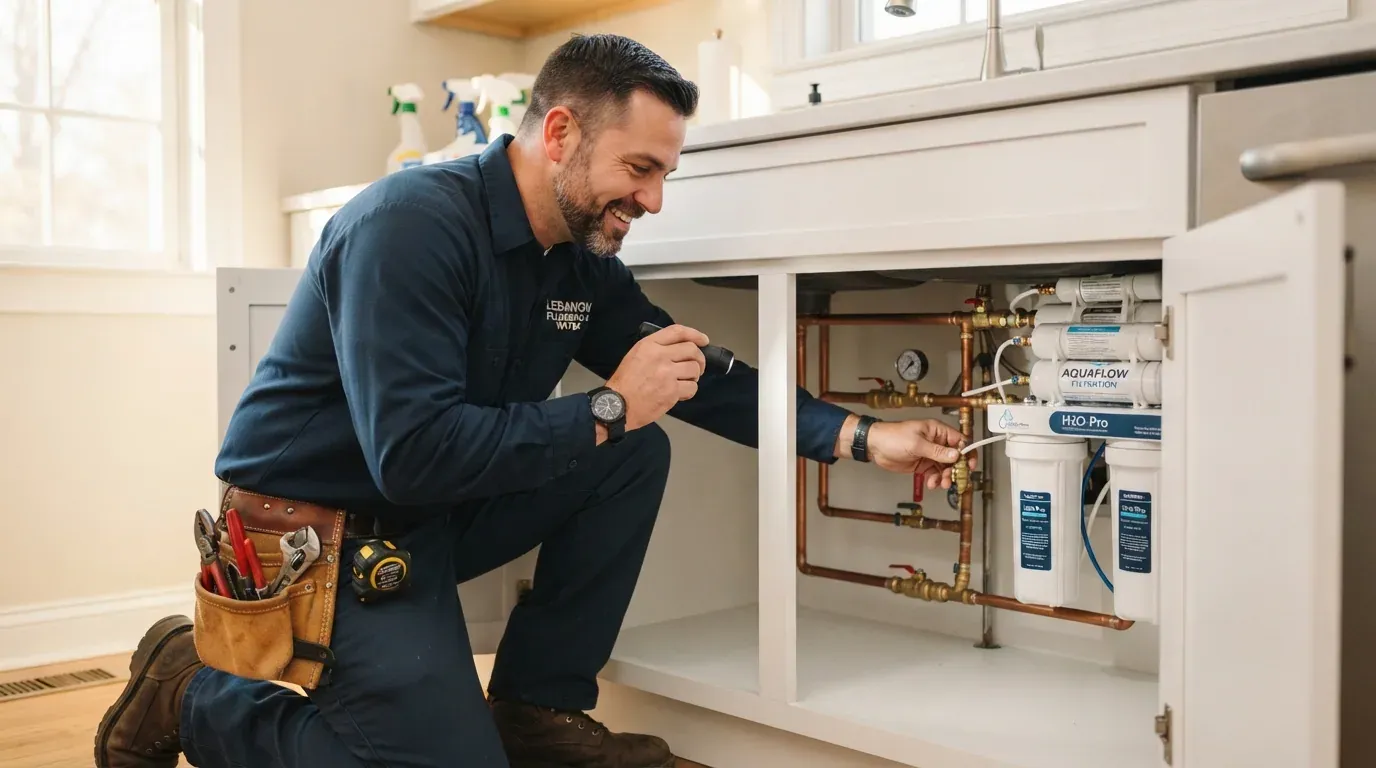
Emergency Plumbing
Emergency Plumbing in Lebanon County
When water is coming in and you cannot stop it, the first ninety seconds matter more than who you call. Shut it off, then get us out.
What is included
What this service covers
What we actually do on this job, and what you can expect us to deal with while we are there.
- Burst and split pipes, including freeze damage
- Sewage backing up into the house
- Major leaks running into ceilings, walls or electrics
- Complete loss of water to the property
- Water heater failures and flooding
- Making a property safe and dry enough to plan the real repair
Signs to look for
You may need this if you are seeing any of these
- Water coming in that you cannot trace or stop
- Sewage or foul water rising out of a floor drain, tub or toilet
- A ceiling staining, bulging or dripping
- No water at any fixture in the house
- Water anywhere near an outlet, panel or light fitting
- A water heater leaking from underneath the tank
Why it happens
What usually causes it
01
Freeze and thaw
Water expands as it freezes and splits the pipe, but nothing shows until the thaw arrives and the split starts passing water. Central Pennsylvania produces a run of these every winter, concentrated in crawl spaces, unheated back additions and exterior walls.
02
Corrosion reaching the end of its life
Galvanized supply and cast iron waste both fail from the inside out. On the older Lebanon city housing stock, a pinhole that has been weeping quietly for months will eventually open up properly.
03
Pressure problems
A failed pressure reducing valve, or a closed system with no working expansion tank, pushes pressure past what fittings and flexible connectors are rated for. Washing machine and toilet supply hoses are usually first to go.
04
A blockage with nowhere to go
Sewage backing up is rarely a sudden event. It is usually a lateral that has been narrowing for years, reaching the point where one more load of laundry tips it over.
Our approach
How we handle this job
Specific to this work rather than a generic checklist bolted onto every page.
01
Stop the water first
On the phone we will talk you to the main shutoff, usually on the basement wall facing the street near the meter, before anything else. Every minute the water runs adds to what has to be dried out afterwards.
02
Make it safe
Water near electrics changes the order of operations. If it is reaching wiring, a panel or a light fitting, that circuit comes off before anyone works around it.
03
Find the actual source
Water tracks along joists and appears somewhere other than where it started, so the visible drip is often not the failure. We trace it back rather than opening up the first stain we see.
04
Price it, then fix it
You get the cost before we start. Where a permanent repair needs parts or a bigger dig, we will say so and make it safe and watertight in the meantime rather than improvising something you pay for twice.
Why the first few minutes matter more than the phone call
Almost every expensive water damage claim has the same shape. Not a dramatic failure, but a small one that ran for a long time before anyone closed a valve. A supply line behind a washing machine can put out a remarkable amount of water in an hour, and drying out a finished basement costs far more than the fitting that failed.
So the order is always the same: stop the water, make it safe, then worry about who is fixing it. We will talk you through the shutoff on the phone before we get in the truck.
What tends to go wrong here, and where
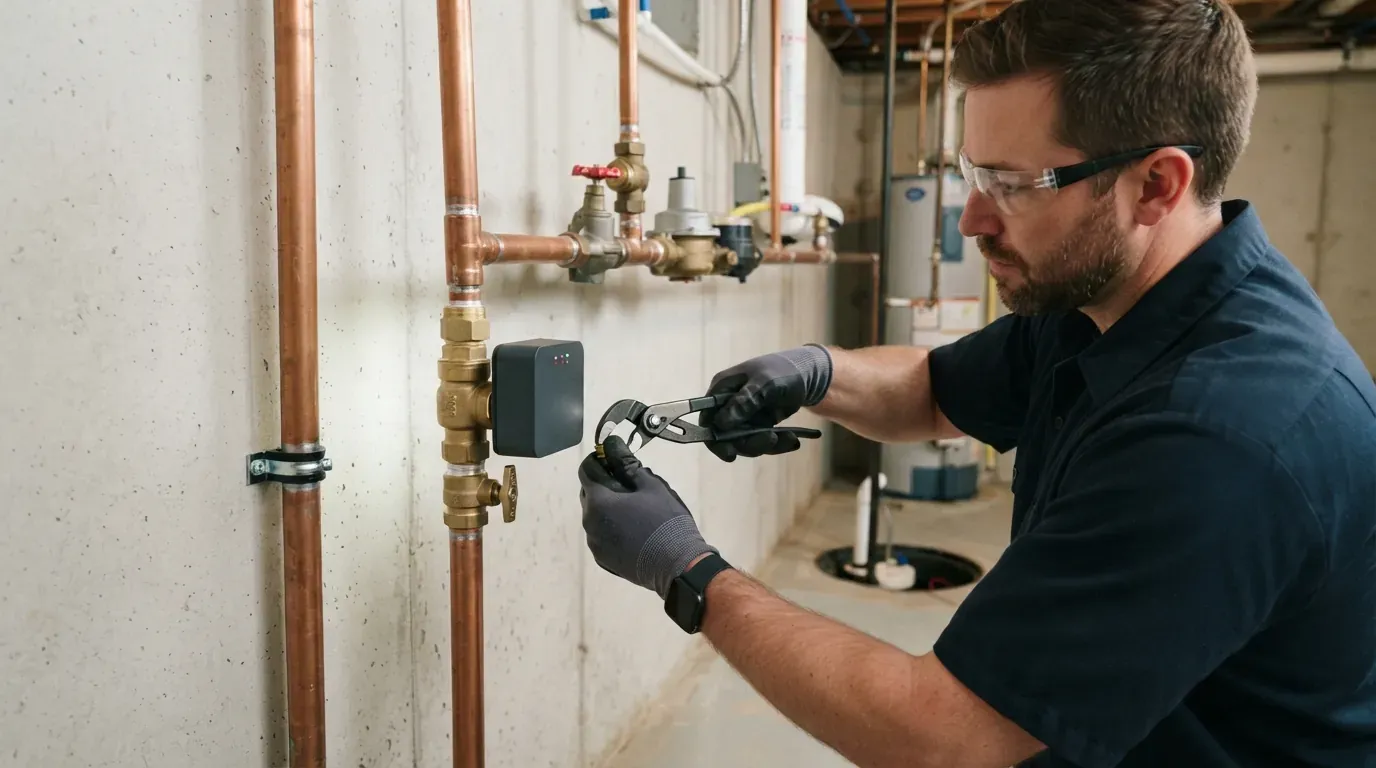
Lebanon County’s housing stock shapes this. In the older parts of Lebanon city, rowhomes were built without insulated cavities and supply lines run in places nobody would put them today: along exterior walls, through unheated back additions, into porches that were enclosed decades later. Those are the pipes that split in a cold snap, and they split in the same places every year.
Out in the townships the pattern is different. Longer runs, more pipe in crawl spaces, lines out to barns and outbuildings that nobody drained in October, and properties on well systems where a failed pressure tank or pump means no water at all rather than a leak.
Emergency work and honest hours
We take emergency calls during business hours and put them ahead of scheduled work. What we will not do is advertise round-the-clock cover we cannot actually staff, because a plumbing site that promises a truck at 2am and does not answer the phone has made your night worse rather than better.
If something fails overnight, shut the main off and call first thing. A house with the water off has stopped getting worse, and that buys you until morning for almost everything short of sewage indoors.
Prevention that genuinely works
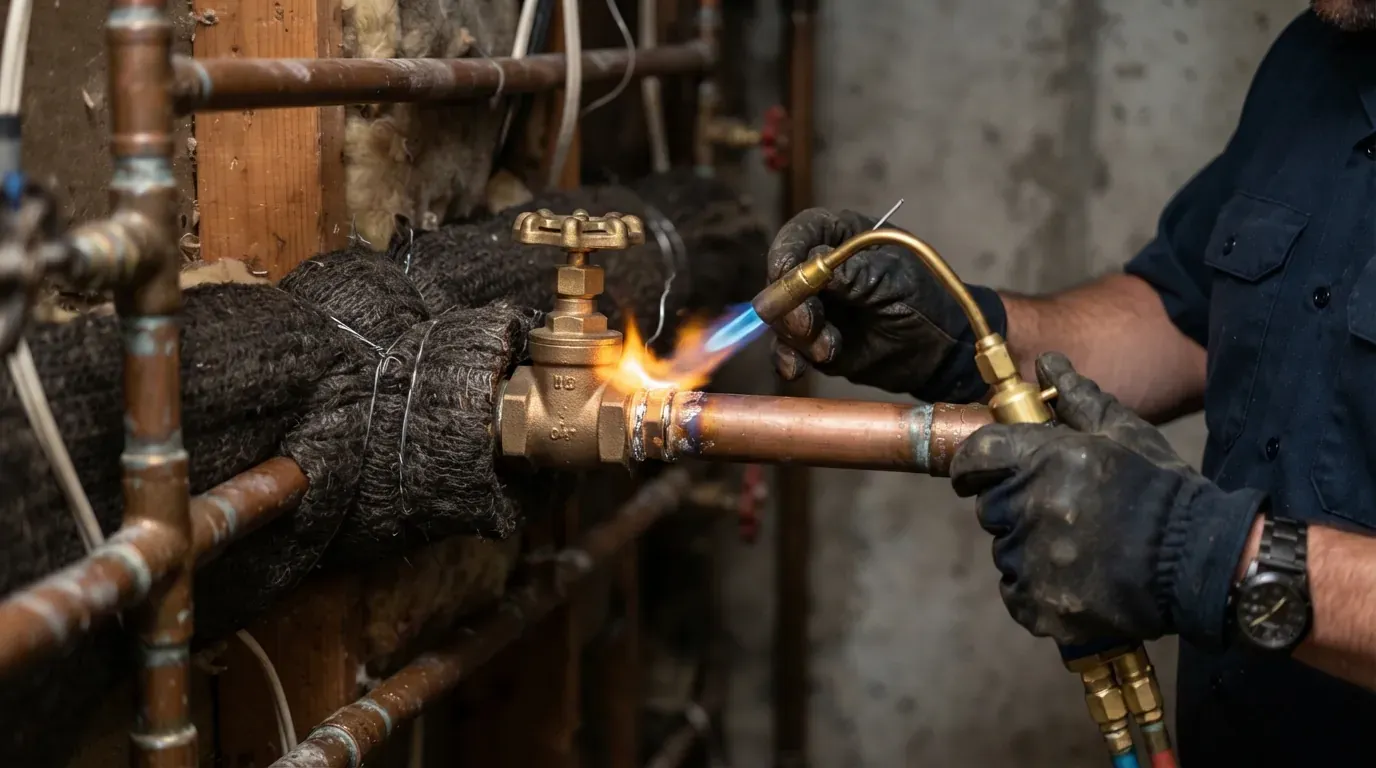
The dull measures are the ones that pay. Disconnect and drain outside hose bibs before the first hard freeze. Insulate anything running through unheated space. Replace rubber washing machine hoses with braided stainless ones before they let go. Learn where your main shutoff is and check it turns.
If you want the seasonal detail, we have written it up in how to stop pipes freezing.
Questions
Emergency plumbing questions
Specific to this job. Every service page here has its own, none repeated.
General FAQCommon questions
What should I do before you arrive?
Do you offer 24 hour emergency plumbing?
How do I find my main shutoff valve?
What actually counts as a plumbing emergency?
I smell gas near the water heater. Should I call you?
Will my homeowners insurance cover this?
Can you stop the leak today even if the full repair takes longer?
Related services
- Burst pipe repairA split pipe is usually the visible end of a longer story about where that run sits and how cold it got. We repair the break and deal with the reason it happened.
- Leak detectionFinding the leak accurately is what keeps the repair small. Guessing is what turns one hole in a wall into three.
- Sewer line repairThe lateral from your house to the main is the property owner's responsibility in most Lebanon County municipalities. We inspect it before quoting it.
- Water heater repairPlenty of water heater faults are a part, not a tank. Knowing which you have before spending anything is the whole job.
Ready when you are
Need emergency plumbing in Lebanon County?
Tell us what is going wrong. We come out, look at it properly, and give you the price before anything starts.
- Licensed and insured
- Residential and commercial
- Price agreed before work starts
Talk to a plumber
Tell us what is going wrong and we will arrange a visit.
Rather not call? Request service online
Emergency callouts during business hours