
Bathroom & Kitchen
Faucet, Sink and Shower Repair
Small fixture jobs, done properly. Including the seized shutoff valve nobody mentions until it will not turn.
What is included
What this service covers
What we actually do on this job, and what you can expect us to deal with while we are there.
- Dripping and leaking faucets, kitchen and bathroom
- Cartridge, washer and ceramic disc replacement
- Shower valve and mixer repair, including thermostatic units
- Leaking sink traps, waste connections and pop-up assemblies
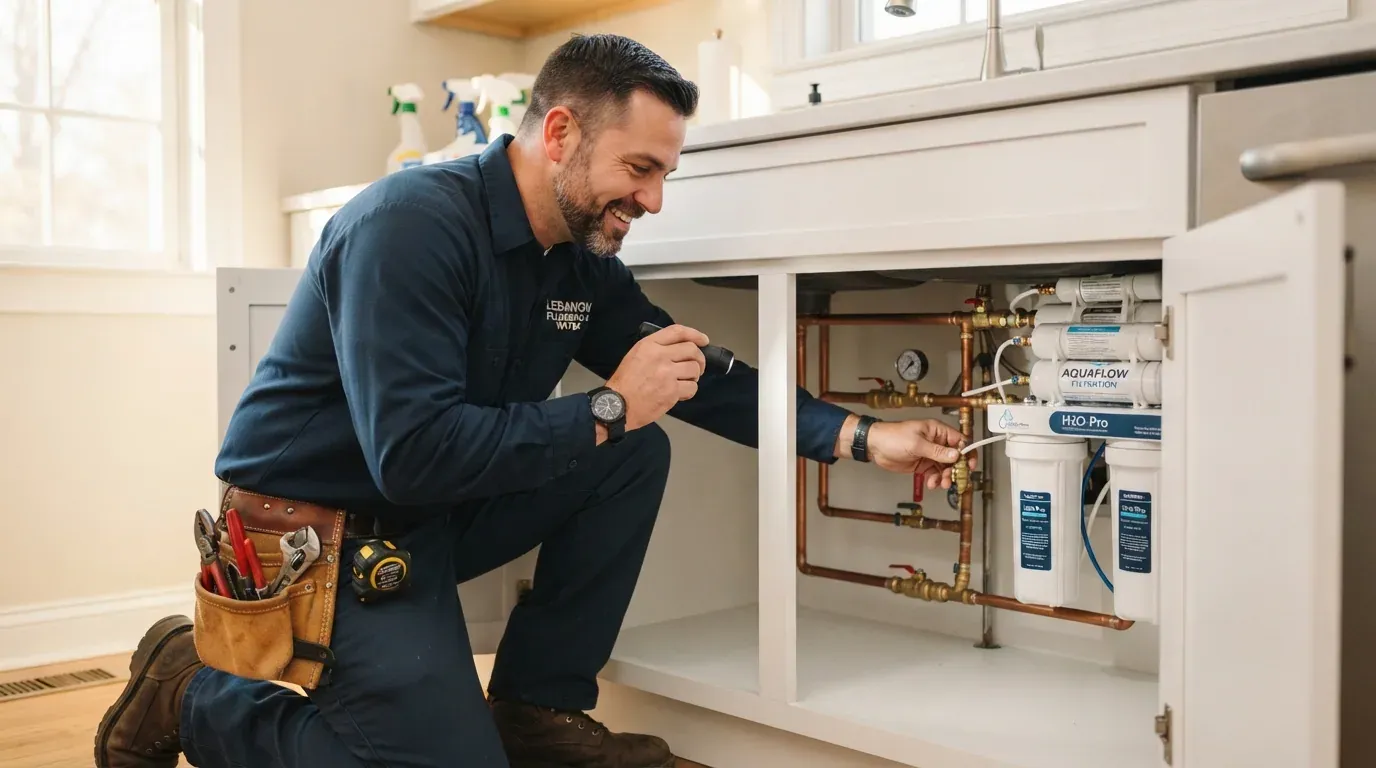
- Replacing seized or leaking isolation shutoff valves
- New faucet, sink and shower fixture installation
- Low flow caused by scaled aerators and shower cartridges
Signs to look for
You may need this if you are seeing any of these
- A faucet dripping after it is fully closed
- Weak flow from one fixture while the rest of the house is fine
- Water under the sink or inside the vanity cabinet
- A shower that runs hot then cold, or will not hold temperature
- Handles that are stiff, loose or spin without effect
- Green or white crusting around the base of a faucet
Why it happens
What usually causes it
01
Worn cartridge or seals
The most common cause of a drip. Rubber seals and ceramic discs wear, and once they no longer seat the faucet passes water regardless of how hard the handle is turned.
02
Scale from hard water
Limestone groundwater deposits mineral in aerators, shower cartridges and valve bodies. It is the usual explanation for one fixture running weak while the rest of the house is normal.
03
Failed trap or waste connections
Slip joints under a sink loosen, washers perish and plastic traps crack. The leak is often slow enough to rot the cabinet base before anybody notices it.
04
Thermostatic or pressure balance valve failure
A shower that swings between hot and cold, or will not reach temperature, usually has a failing mixing cartridge rather than a water heater problem.
Our approach
How we handle this job
Specific to this work rather than a generic checklist bolted onto every page.
01
Check the simple things first
A blocked aerator or a scaled cartridge explains most weak-flow complaints and costs very little to resolve. There is no point discussing pipework before ruling those out.
02
Repair where parts exist
Most quality faucets are worth repairing with the correct cartridge rather than replacing. We identify the fixture and use matching parts.
03
Deal with the shutoffs
Old isolation valves under sinks frequently seize or start weeping once disturbed. We check them as part of the job and replace them where needed rather than leaving you with a fixture you cannot isolate.
04
Test properly before leaving
Fixtures get run under load and connections checked once they have been under pressure for a while, because slip joints often only show a leak after they have sat.
Small jobs, done so they stay done
Fixture work is where a lot of plumbing goes quietly wrong. The repair itself is straightforward, but the surrounding details get skipped, and the customer ends up calling again.
The usual example is the isolation valve. Old multi-turn stops under sinks seize with age and hard water. A plumber who forces one to change a faucet, gets it moving, and leaves it weeping has created a new problem. We check them as part of the job and replace them with quarter-turn valves where needed, so you can actually isolate that fixture next time.
Weak flow at one fixture is nearly always scale
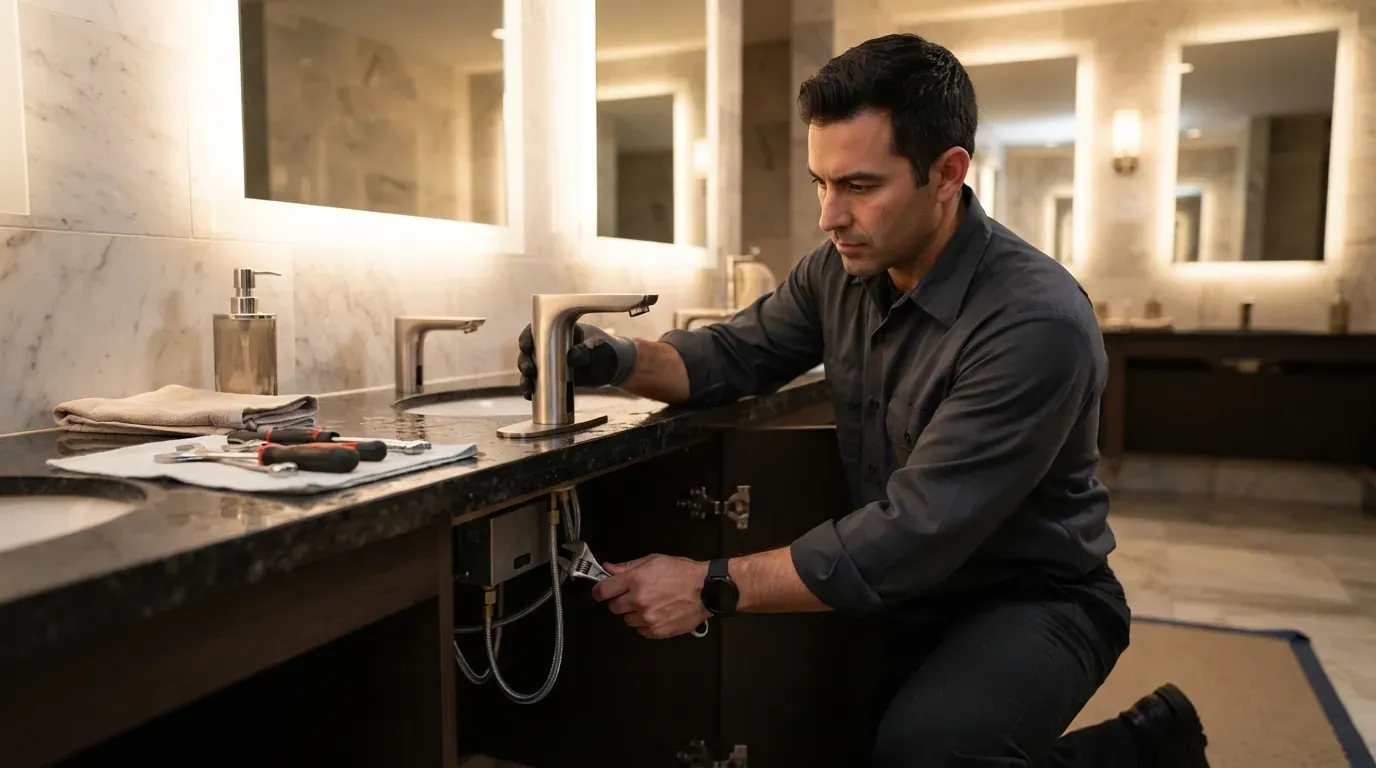
If one faucet or shower runs weak while everything else in the house is fine, your pipework is not the problem.
The county’s limestone water leaves mineral deposits in aerators, shower cartridges and valve bodies. Unscrewing and cleaning an aerator is something most people can do themselves in five minutes, and it resolves a surprising share of “low pressure” complaints.
Genuine whole-house pressure problems look different: weak everywhere, worse upstairs, worse when two things run at once. That points at the supply, and it is covered under pipe repair.
Group them up
If you have a dripping faucet, a slow bathroom sink and a shower that has been annoying you for a year, get them all looked at in one visit. Three small things in one appointment is considerably better value than three call-outs, and it is worth writing the list before you ring.
Questions
Faucet and sink repair questions
Specific to this job. Every service page here has its own, none repeated.
General FAQCommon questions
Is it cheaper to repair a faucet or replace it?
Why is the water pressure bad at just one faucet?
My shower goes hot and cold on its own. Is that the water heater?
There is water in the cabinet under my sink. Where is it from?
The shutoff valve under my sink will not turn. Can you fix it?
Can you fit a faucet or sink I bought myself?
Do you do small jobs, or is there a minimum?
Related services
- Toilet repairA running toilet is one of the largest quiet water bills in a house, and it is usually a part costing very little.
- Garbage disposal repairHalf of dead disposals are a tripped reset or a jam. It is worth knowing which before anyone charges you for a new one.
- Leak detectionFinding the leak accurately is what keeps the repair small. Guessing is what turns one hole in a wall into three.
- Well pump and water treatmentOutside the boroughs, the pump, the pressure tank and the water chemistry are all yours. There is no utility to call when the pressure drops.
Ready when you are
Need faucet and sink repair in Lebanon County?
Tell us what is going wrong. We come out, look at it properly, and give you the price before anything starts.
- Licensed and insured
- Residential and commercial
- Price agreed before work starts
Talk to a plumber
Tell us what is going wrong and we will arrange a visit.
Rather not call? Request service online
Emergency callouts during business hours