
Emergency Plumbing
Burst and Frozen Pipe Repair
A split pipe is usually the visible end of a longer story about where that run sits and how cold it got. We repair the break and deal with the reason it happened.
What is included
What this service covers
What we actually do on this job, and what you can expect us to deal with while we are there.
- Locating the split when the water is appearing somewhere else
- Cutting out and replacing failed sections of copper, PEX, CPVC or galvanized
- Thawing frozen runs safely, without a naked flame
- Repiping short runs that keep failing rather than patching them again
- Insulating and rerouting pipe out of the space that froze it
- Replacing failed supply connectors at appliances and fixtures
Signs to look for
You may need this if you are seeing any of these
- A tap that has stopped delivering water during cold weather
- Water appearing through a ceiling or down a wall
- A hissing or running sound with every tap closed
- A sudden drop in pressure across the house
- Visible bulging, frost or a split line on exposed pipe
- Water meter still ticking over when nothing is being used
Why it happens
What usually causes it
01
Water freezing in an unheated run
Ice expands and forces the pipe wall apart, but the split usually stays sealed by the ice itself. The flood arrives on the thaw, which is why the damage often shows up on the first mild day after a cold snap rather than during it.
02
Pipe run through the wrong space
Supply lines in crawl spaces, unheated garages, enclosed porches and exterior wall cavities are the ones that freeze. In older Lebanon city housing this is extremely common, because the additions came later and the insulation did not.
03
Age and corrosion
Galvanized steel rusts inward until the wall is too thin to hold pressure, and copper develops pinholes where water chemistry or velocity has been working on it for decades. These fail without any help from the weather.
04
Excess pressure
A failed pressure reducing valve, or thermal expansion in a closed system with no expansion tank, pushes pressure well past what connectors are rated for. Braided and rubber appliance hoses go first.
Our approach
How we handle this job
Specific to this work rather than a generic checklist bolted onto every page.
01
Isolate and stabilise
Water off at the main or at the nearest isolation point, then we work out what is still live. If the ceiling is holding water we will often relieve it deliberately in one controlled spot rather than let it come down across the room.
02
Find the break, not the puddle
Water runs along joists and pipe runs before it drops, so the wet patch is frequently nowhere near the split. We trace it back so the opening we make is the one that needs making.
03
Repair or replace the run
A clean single split in otherwise sound pipe is a section replacement. A run that has failed twice, or galvanized that is closing up along its length, is worth replacing properly rather than patching again.
04
Fix the reason it froze
Where a freeze caused it, putting the same pipe back in the same cold space guarantees a repeat. Insulating it, rerouting it, or adding a drain point is usually a small addition to a job that is already open.
Where pipes actually freeze around here
Freeze calls are not random. They cluster in the same few places, and once you know the pattern you can predict which houses will call in January.
Rowhomes in the older parts of Lebanon city were built before anyone insulated a cavity, and later work added kitchens, bathrooms and enclosed back porches onto the outside of the original envelope. The supply lines feeding those additions frequently run through spaces that get no heat at all. Those are the pipes that split.
Out in the townships the exposure is different but the result is the same: long runs under crawl spaces, lines out to barns, workshops and outdoor hydrants, and vacation or seasonal properties where the heat is turned down and nobody has drained anything.
Repair or repipe
The honest answer depends on what the pipe looks like once it is open, and we would rather show you than tell you.
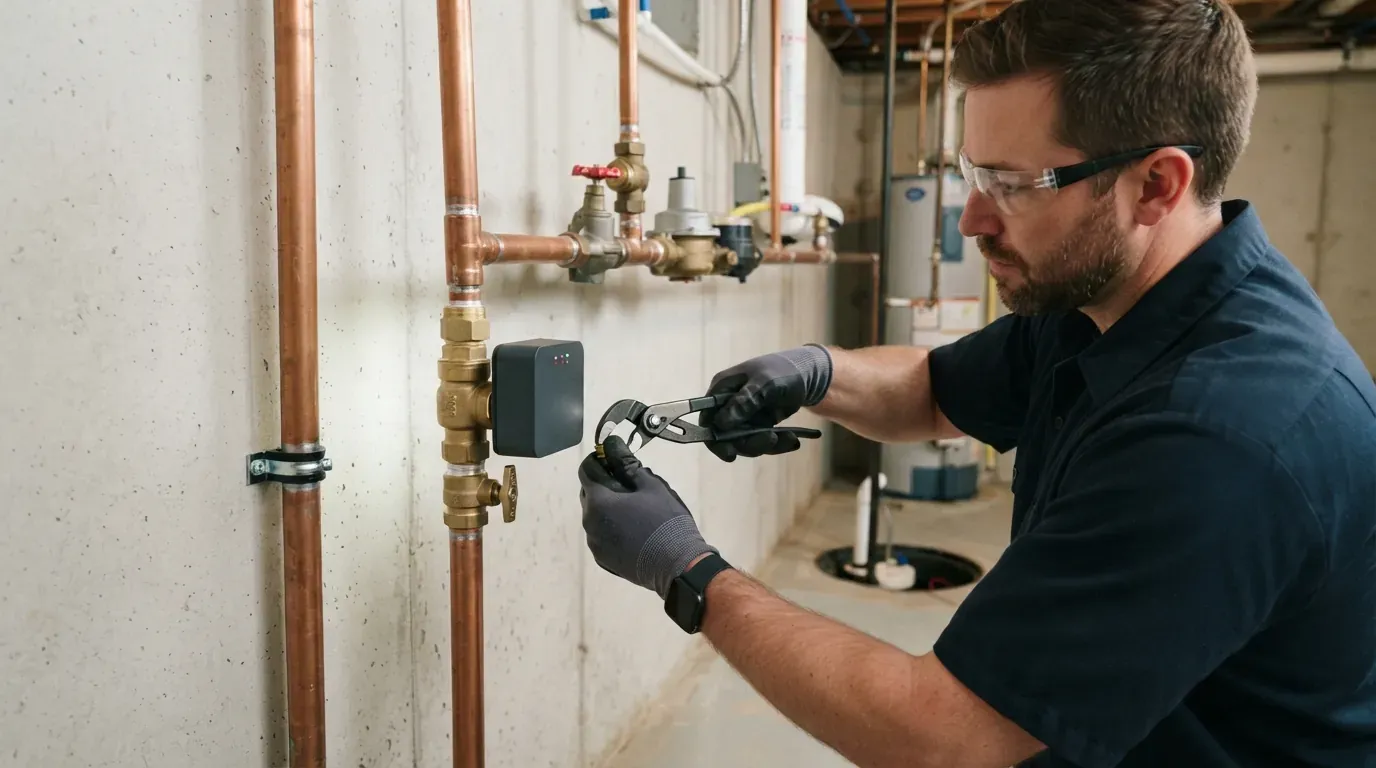
Sound copper with one clean split is a straightforward section replacement, and there is no reason to do more. Galvanized steel that is rusting closed along its length is a different conversation, because the next failure is already forming a few feet away. Repeatedly patching a run like that costs more over two winters than replacing it once.
What we will not do is quote a repipe over the phone on a pipe nobody has seen yet.
Getting the cause, not just the split
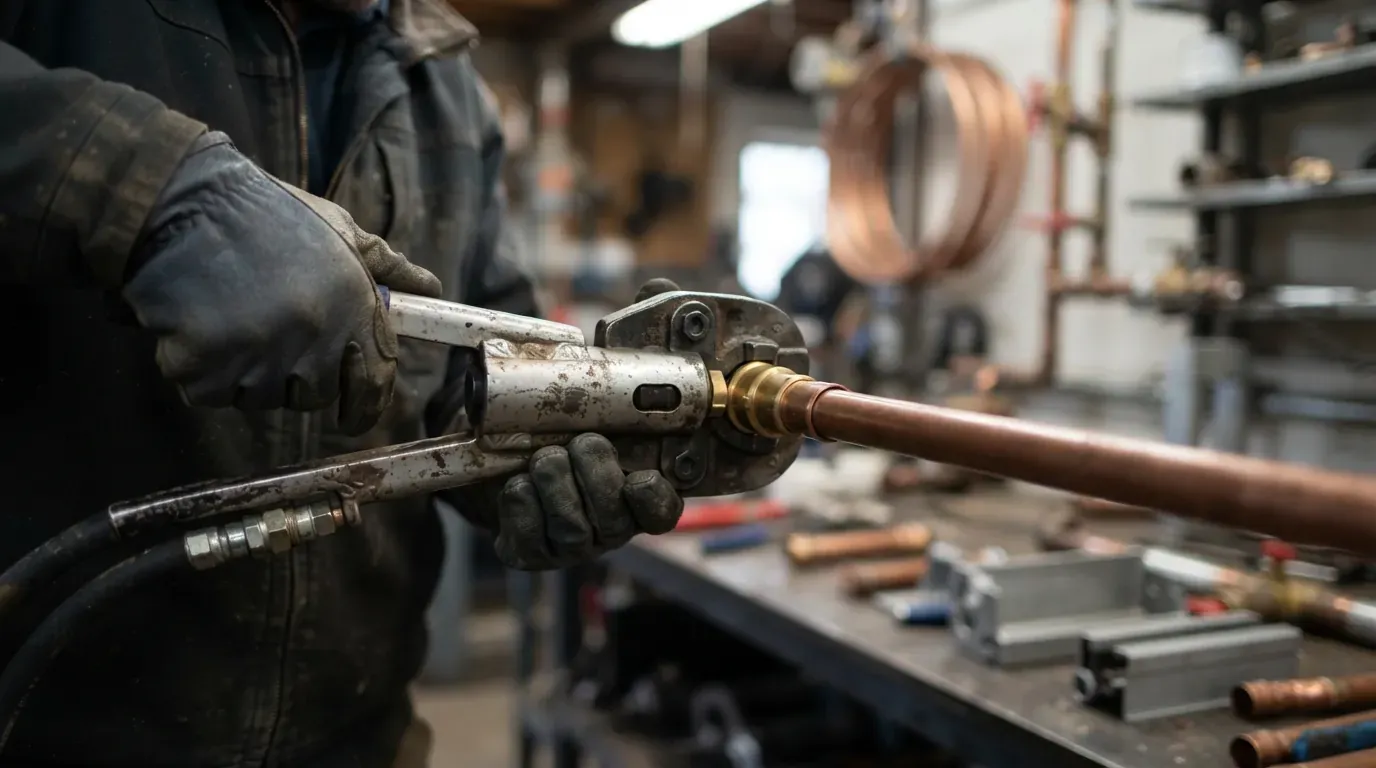
If a freeze caused the failure, putting identical pipe back into the identical cold space is a guarantee of a repeat call. While the run is already open, insulating it, moving it into heated space, or fitting an isolation valve and drain so it can be emptied each autumn is usually a small addition to the work.
That last option is the one most farm and outbuilding customers should ask about. A buried line to a barn that gets drained every October does not burst.
For the seasonal checklist, see how to prevent frozen pipes. If water is coming in right now, the emergency page has the shut-off sequence.
Questions
Burst pipe repair questions
Specific to this job. Every service page here has its own, none repeated.
General FAQCommon questions
My tap stopped during a cold snap. Has the pipe already burst?
Why did the flood only start once it warmed up?
Can you repair just the split section, or does the whole pipe need replacing?
How do I know if a pipe is leaking inside a wall?
Will you have to open up my wall or ceiling?
The pipe froze once. Will it keep happening?
Is a burst pipe covered by insurance?
Related services
- Emergency plumbingWhen water is coming in and you cannot stop it, the first ninety seconds matter more than who you call. Shut it off, then get us out.
- Pipe repairOn older housing the real question is rarely how to patch this leak. It is whether the rest of that run is about to do the same thing.
- Leak detectionFinding the leak accurately is what keeps the repair small. Guessing is what turns one hole in a wall into three.
- Water line repairThe buried run from the curb stop to your house belongs to you. When it fails, so does the whole property's water.
Ready when you are
Need burst pipe repair in Lebanon County?
Tell us what is going wrong. We come out, look at it properly, and give you the price before anything starts.
- Licensed and insured
- Residential and commercial
- Price agreed before work starts
Talk to a plumber
Tell us what is going wrong and we will arrange a visit.
Rather not call? Request service online
Emergency callouts during business hours