
Drain & Sewer
Sewer Line Repair and Replacement
The lateral from your house to the main is the property owner's responsibility in most Lebanon County municipalities. We inspect it before quoting it.
What is included
What this service covers
What we actually do on this job, and what you can expect us to deal with while we are there.
- Camera inspection to find the break, sag, offset or root intrusion
- Spot repairs where a single section has failed
- Full lateral replacement by open excavation
- Trenchless pipe bursting and cured in place lining where suitable
- Clearing and re-lining root damaged clay and cast iron
- Locating and installing an accessible cleanout
- Municipal permits and pre-backfill inspections
Signs to look for
You may need this if you are seeing any of these
- Backups affecting more than one fixture at the same time
- Gurgling from a floor drain or tub when a toilet is flushed
- Sewage odour outdoors, particularly after rain
- An unusually green, lush or sunken strip across the yard
- Blockages that return within weeks of being cleared
- Slow drainage throughout the whole house rather than one fixture
Why it happens
What usually causes it
01
Roots through an open joint
Older clay laterals come in short sections with a joint between each one, and joints move as the ground settles. Once one opens, roots find the moisture and grow in. Cutting them restores flow and leaves the opening, so they return.
02
Cast iron corroding from the inside
Common close to the building on older Lebanon city properties. The wall roughens as it rusts, catching paper and grease, and eventually scales badly enough to close the bore.
03
A sag holding water
Long laterals on the suburban lots around Palmyra and Annville settle over decades. A section that drops even slightly holds water permanently, solids settle in it, and blockages recur in exactly the same place.
04
Crushing and offsets
Ground movement, vehicle loading over a shallow run, or a joint pulling apart leaves a step inside the pipe that catches everything passing. This is the failure mode that cabling cannot help with at all.
Our approach
How we handle this job
Specific to this work rather than a generic checklist bolted onto every page.
01
Camera the line first
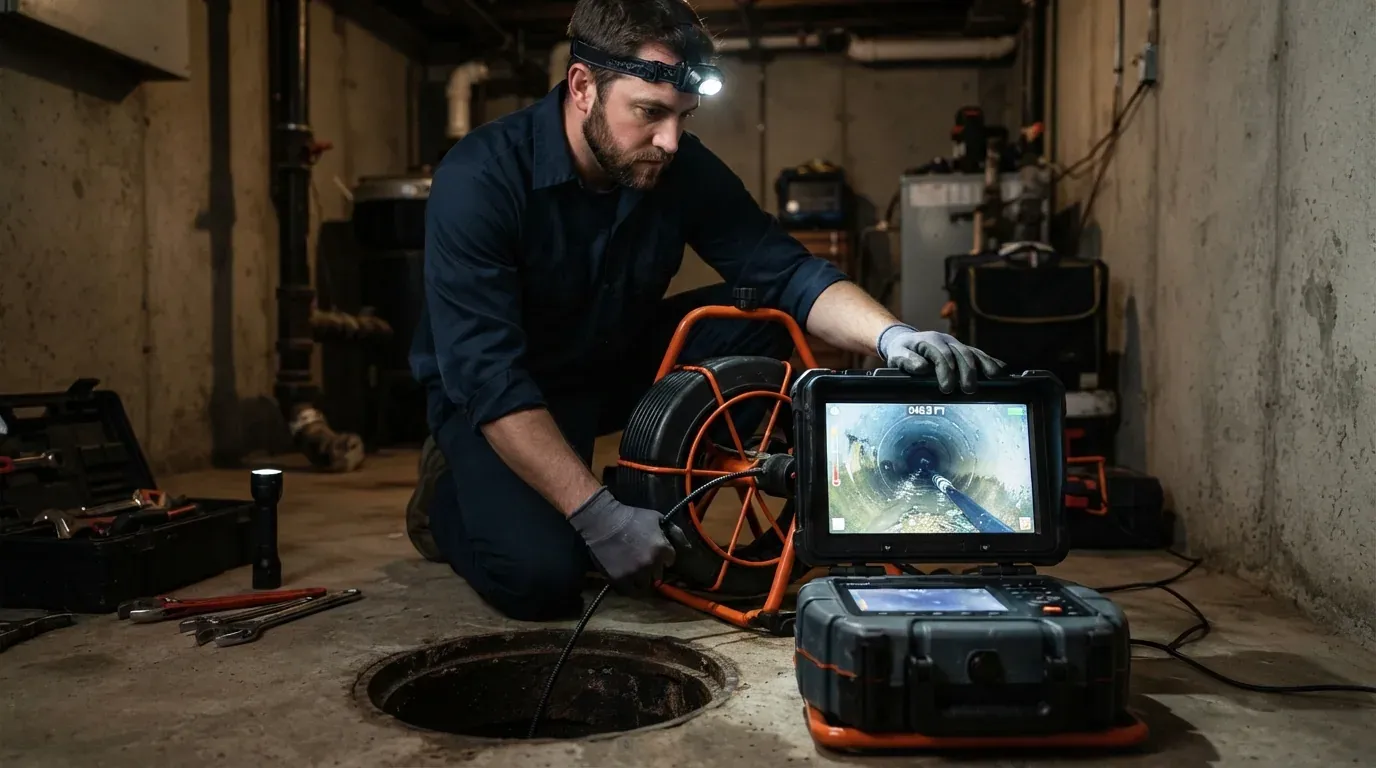
We put a camera down before quoting anything. It shows the material, the condition, the depth and the exact distance to the defect, and that distance decides whether this is a small repair near the foundation or a run out to the street.
02
Locate and mark
The camera head is tracked from the surface so the defect is marked on the ground. That is what keeps excavation to one targeted hole rather than a trench looking for the problem.
03
Choose the method honestly
Spot repair, lining, pipe bursting or open excavation each suit different conditions. We will tell you which the footage supports, including when the cheapest option is the right one.
04
Permits, dig, inspect, restore
Where the municipality requires a permit and a pre-backfill inspection we handle both. PA One Call marks buried utilities before anyone digs, which is a legal requirement rather than an optional step.
Diagnosis before price, every time
The single most useful thing we do on a sewer line is refuse to quote it blind.
A camera run down the lateral shows the material, the condition, the depth and, critically, the exact distance to the problem. That distance is the whole job. Eight feet from the foundation is a morning’s work in one targeted hole. Sixty feet out under the sidewalk is a different project with permits, traffic control and a much larger number attached.
Nobody can tell those apart by looking at a backup in your basement, which is why a confident replacement quote without footage should make you suspicious rather than reassured.
What tends to fail, and where in the county
The housing stock predicts this fairly well.
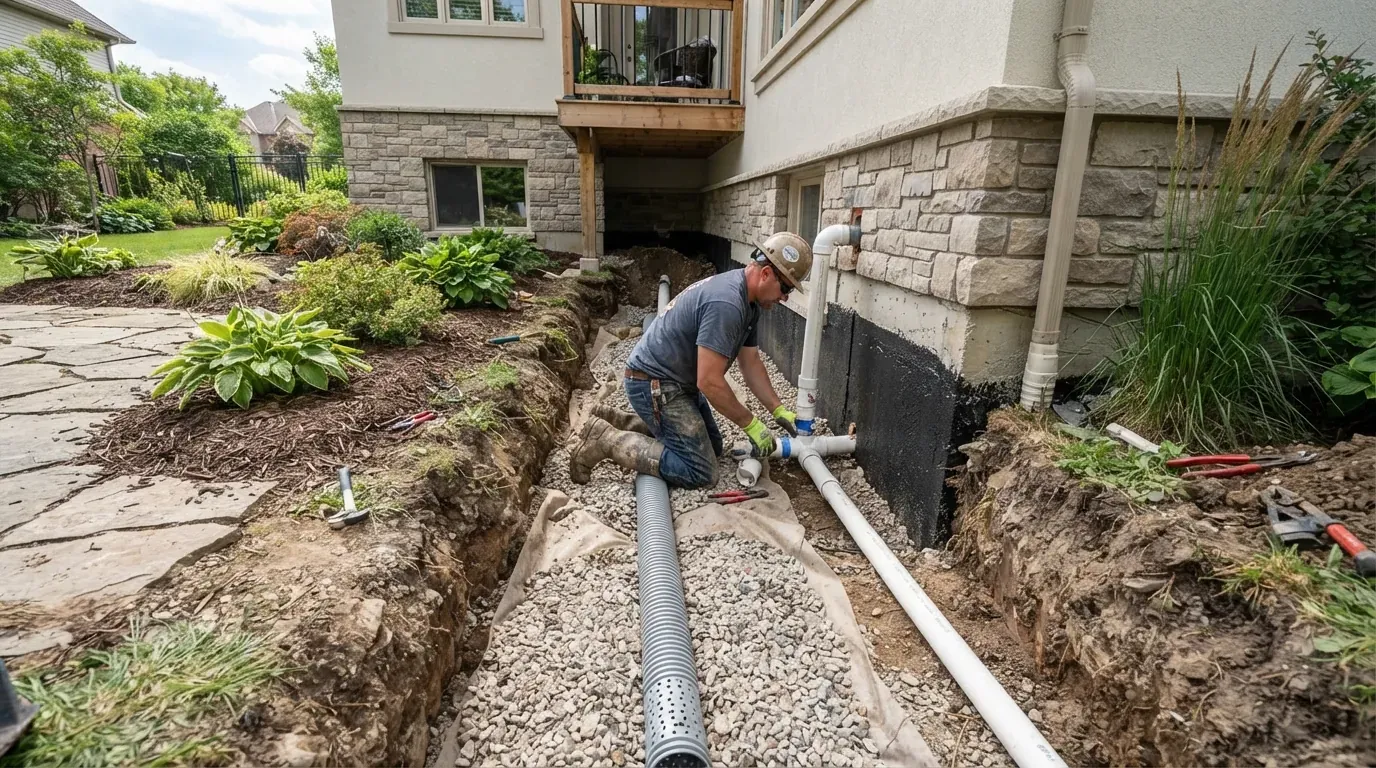
In the older parts of Lebanon city, laterals are frequently cast iron near the building and clay further out, running under narrow streets alongside everything else that is buried there. Cast iron rusts rough and closes up. Clay comes in short jointed sections, and once a joint opens, roots find it. Excavation is harder here too, because the trench often crosses a sidewalk or reaches into the cartway.
In the postwar and later development around Palmyra, Annville and the townships, the houses sit further back from the road, so laterals are long. Long runs settle, and a section that drops slightly holds water permanently. Solids collect in that low spot and the blockages recur in precisely the same place.
Choosing between repair, lining and replacement
Once there is footage, the options narrow quickly and honestly.
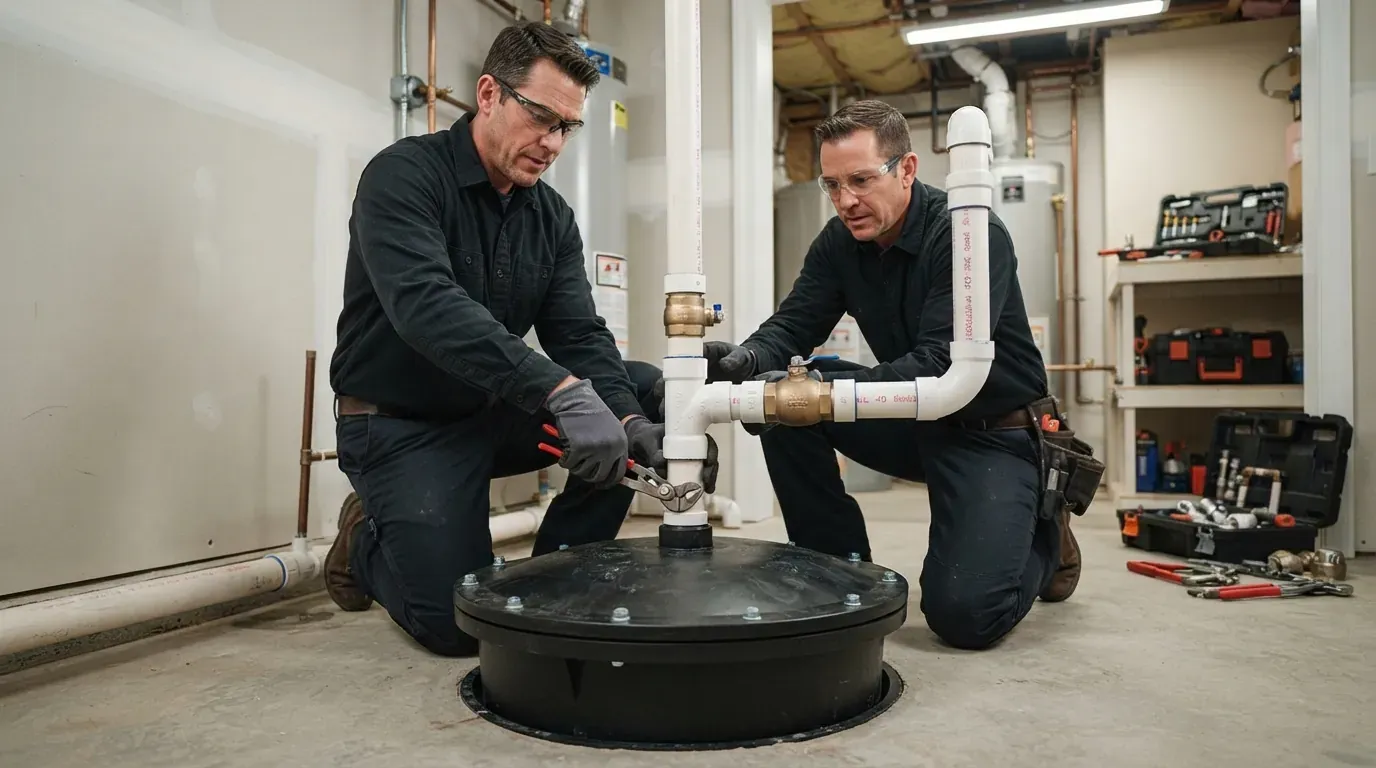
A spot repair suits one failure in an otherwise sound pipe. Lining installs a new wall inside the existing pipe and works well against root intrusion and cracking on a continuous run, but it cannot fix a collapse or a sag. Pipe bursting pulls new pipe through the old path and handles worse condition without a full trench, though it needs pits at both ends and clearance from other utilities. Open excavation remains the answer for a collapsed or badly sagged line that needs regrading.
We will tell you which the camera supports, including when it supports the cheapest one.
Questions
Sewer line repair questions
Specific to this job. Every service page here has its own, none repeated.
General FAQCommon questions
How do I tell a blocked drain from a failed sewer line?
Is the sewer lateral mine or the municipality's?
Can a sewer line be replaced without digging up the whole yard?
Why do you insist on a camera inspection before quoting?
How long does a lateral replacement take?
What happens to my yard, driveway or sidewalk?
Will tree roots come back after the repair?
Do I need a permit, and who pulls it?
Related services
- Camera inspectionThe cheapest hour you can spend on a drain problem. It turns a guess about what is buried in your yard into a measured fact.
- Drain cleaningClearing a drain is easy. Working out whether it will block again next month is the part that actually saves you money.
- Hydro jettingCabling opens a channel through a blockage. Jetting cleans the pipe wall back to full bore. The difference shows up in how long the line stays clear.
- Lead service line replacementIf your water authority wrote to you, the buried run from the curb stop into your house is the part you have to deal with.
Ready when you are
Need sewer line repair in Lebanon County?
Tell us what is going wrong. We come out, look at it properly, and give you the price before anything starts.
- Licensed and insured
- Residential and commercial
- Price agreed before work starts
Talk to a plumber
Tell us what is going wrong and we will arrange a visit.
Rather not call? Request service online
Emergency callouts during business hours