Leaks
How to Tell if You Have a Hidden Water Leak
There is one free test that tells you definitively whether water is escaping somewhere in your house. Do it before you pay anyone to look.
Published · 6 min read
Most people find out about a hidden leak from a water bill rather than from a puddle. By then it has usually been running for a while.
The good news is that confirming whether you actually have one costs nothing and takes about ten minutes.
The meter test
This is the single most useful diagnostic available to a homeowner, and it settles the question before you spend anything.
Turn off every water-using thing in the property. Taps, showers, the dishwasher, the washing machine, the ice maker in the fridge, any humidifier, and the irrigation system if you have one. Everything.
Now go and look at your water meter. Most have a small triangular or star-shaped leak indicator that spins at even very low flow, and all have a dial you can read.
If the indicator is turning, or if the reading changes over fifteen or twenty minutes with nothing running, water is leaving your system somewhere. That is a leak, and it is worth finding.
If it is completely still, you almost certainly do not have a supply leak. Whatever is happening is more likely condensation, groundwater or a roof problem, and those are different trades entirely.
You can narrow it down one more step. Close the main shutoff where the water comes into the house and watch the meter again. Still moving means the leak is on the buried supply line between the meter and the house. Stopped means it is somewhere inside.
Rule out the toilet first
Before anything more involved, check the toilets, because they are by far the most common cause of an unexplained water bill and they are silent.
Put a few drops of food colouring in the tank. Do not flush. Wait twenty minutes and look in the bowl. If colour has appeared, water is passing the flapper and running continuously into the drain.
A toilet leaking this way can waste a genuinely large volume of water without making a sound or leaving a mark. The fix is usually a cheap part.
Signs that point to a hidden leak
Beyond the meter, these are worth taking seriously:
- A water bill that has climbed without any change in how you use water
- The sound of running or hissing water when everything is turned off
- Damp patches, staining, or paint bubbling and lifting
- A musty smell in one area that keeps coming back
- Mould reappearing in the same spot after cleaning
- A warm area on a floor slab, which usually means the hot line beneath it
- Reduced pressure with no other explanation
- A patch of lawn that is greener, softer or wetter than everything around it
That last one is the classic sign of a leak on the buried supply line, and it is easy to miss because a healthier patch of grass does not look like a problem.
Where hidden leaks usually are
The locations repeat.
Inside wall cavities, where a pinhole in aging copper or a corroded galvanized run can weep for months. In the older housing across Lebanon city, this is the common one.
Under concrete slabs, on the supply lines running beneath the floor. More common in the postwar construction around Palmyra and the townships than in the older city stock with its full basements.
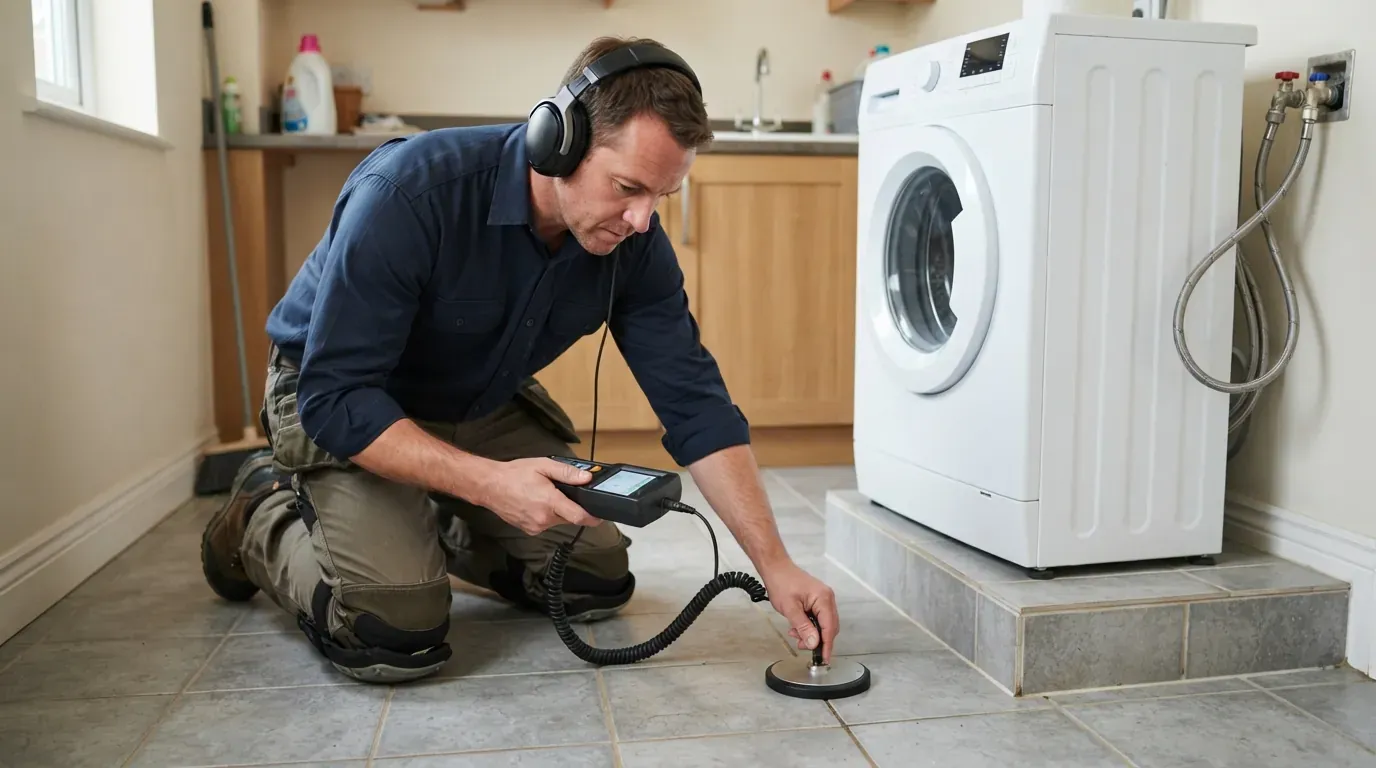
Behind and under appliances, particularly washing machine hoses and dishwasher connections, where a slow drip goes unseen for a long time.
Under sinks, inside vanity cabinets, where the trap or a supply connection weeps into the cabinet base and rots it quietly.
On the buried supply line between the curb stop and the house, which is the property owner’s responsibility and produces no indoor symptom at all.
Why slow leaks cost more than bursts
A burst pipe is dramatic, and because it is dramatic it gets dealt with within the hour. The damage is contained by the speed of the response.
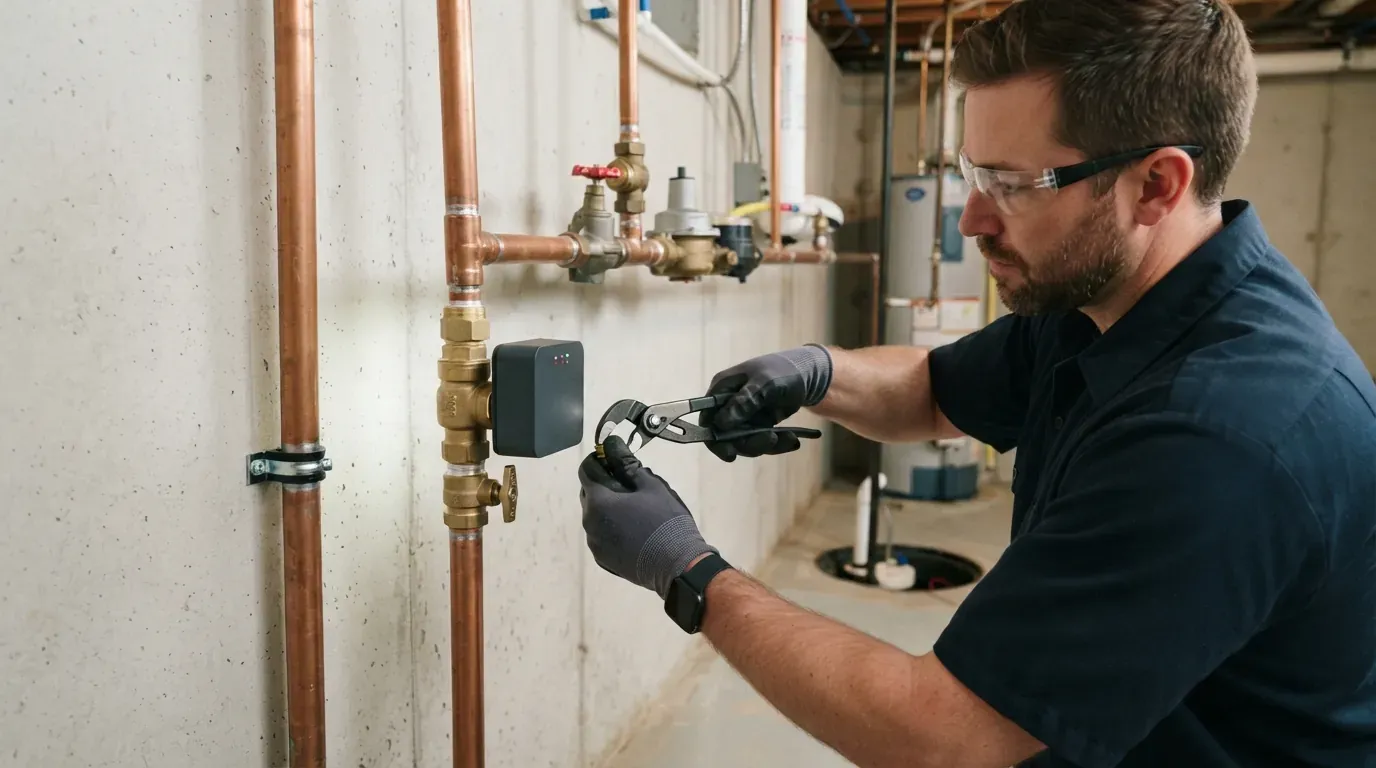
A slow leak has no such advantage. A pinhole weeping inside a wall for six months will rot framing, saturate insulation until it stops insulating, and grow mould through a cavity, all without anyone knowing. The repair to the pipe is trivial. The repairs to everything around it are not.
There is an insurance dimension too. Policies commonly cover sudden accidental discharge and commonly exclude long term seepage, which means the leak that ran quietly for months is exactly the one you may be dealing with yourself. Your policy is the only thing that decides that, but the general shape of it is worth knowing.
When to call someone
If the meter is moving with everything off and the toilets check out clean, something needs finding.
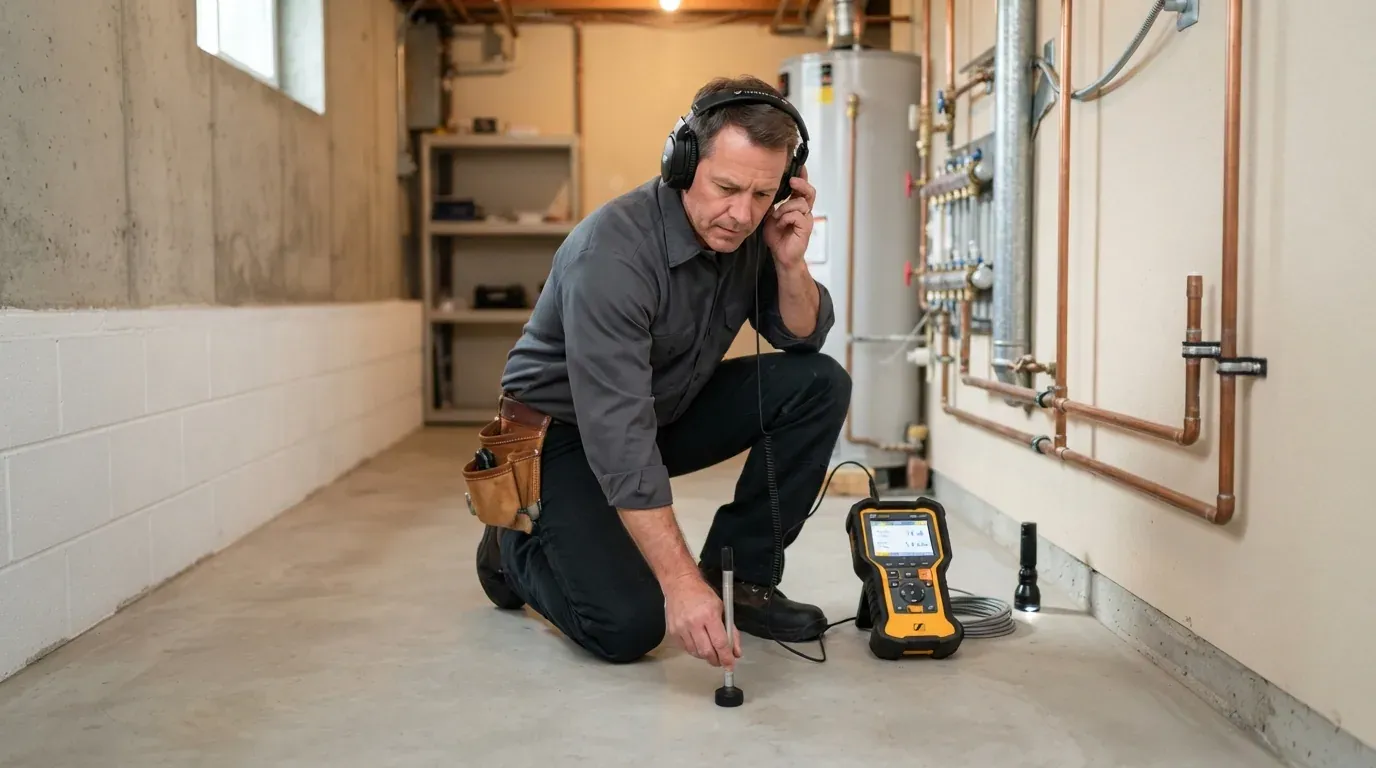
Locating it properly matters more than people expect, because water travels along joists and pipe runs before it surfaces. The damp patch is frequently nowhere near the failure, and opening the wall behind the stain is how one small repair turns into three exploratory holes.
Our leak detection page covers how the position gets narrowed down before anything is opened up. If you have found a warm patch on a floor, slab leak repair is the more specific page.