Drains
Six Signs Your Sewer Line Is Failing
A failing lateral announces itself for months before it stops working. Most of the signs are outdoors, which is why they get missed.
Published · 6 min read
Sewer laterals rarely fail without warning. They give signals for months, sometimes years, and most of those signals are outdoors or subtle enough to get explained away.
The six signs
Backups affecting more than one fixture at once. A single slow sink is a local problem. A toilet and a tub backing up together means the restriction is in a line they share, which is the lateral.
Gurgling from a floor drain or tub when a toilet flushes. Air being pulled through a trap because it cannot get into the system normally. It tells you the two fixtures are connected downstream and the restriction is below where they join.
Sewage odour outdoors. A sound sewer system is sealed. If you can smell it in the yard, particularly after rain, something is not sealed any more.
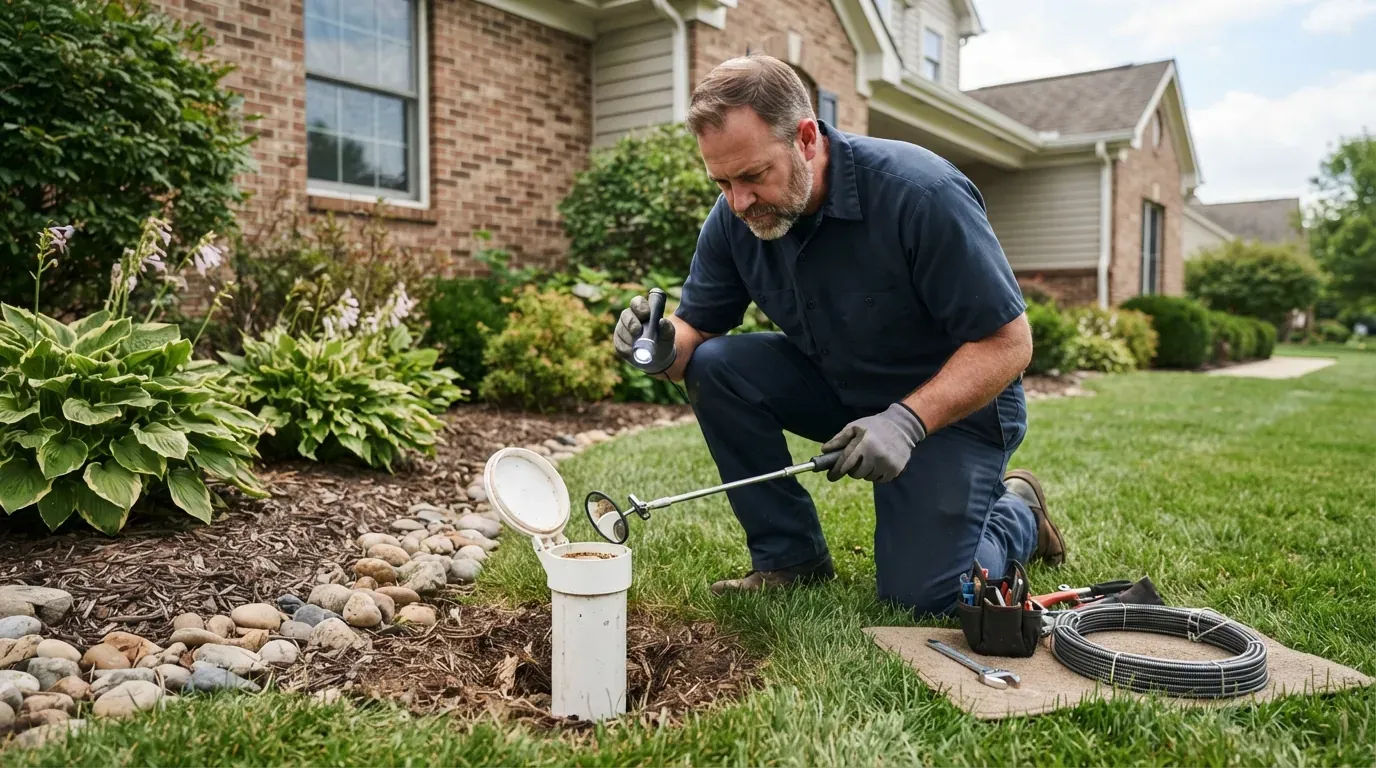
An unusually green or lush strip across the lawn. A leaking lateral fertilises and waters the ground above it. A stripe of grass that is greener than everything around it, in roughly a straight line from the house towards the street, is a fairly reliable sign.
A soft or sunken area following the line of the pipe. Water escaping from a failed lateral washes fines out of the soil, and the ground above settles. A depression that follows a straight path is worth taking seriously.
Blockages that return within weeks of being cleared. The most telling one of all. A line that blocks in the same place repeatedly has a defect, not a usage problem.
Is it my lateral or the city main?
Worth establishing early, because it decides who pays.
In most Lebanon County municipalities the property owner is responsible for the lateral from the building to the connection at the main, including the buried section under the yard and often under the sidewalk or street. Rules vary between the City of Lebanon Authority and individual borough and township authorities, so confirm with whoever bills your sewer.
The quick field test: if several houses on your street are affected at the same time, that points at the public main rather than at your lateral. Call the authority first in that case, and you may have saved yourself a bill entirely.
What actually fails, and why
The housing stock predicts the failure mode fairly well around here.
In the older parts of Lebanon city, laterals are frequently cast iron close to the building and clay further out. Cast iron rusts rough on the inside until it catches paper and grease and eventually scales closed. Clay comes in short sections with a joint between each, and joints move as the ground settles. Once a joint opens, roots find the moisture and grow in.
Roots deserve a specific note, because they are widely misunderstood. Roots do not break into sound pipe. They exploit an opening that already exists. That is why cutting them out restores flow and why they always come back: the cutting treats the symptom and leaves the door open.
In the postwar and later development around Palmyra, Annville and the townships, houses sit further back from the road, so laterals are long. Long runs settle, and a section that drops even slightly holds water permanently. Solids collect in that low spot and blockages recur in precisely the same place.
Never accept a quote without footage
This is the part worth being firm about.
Roots at twelve feet, a scaled cast iron section at the foundation, a sag at twenty feet and a collapse under the sidewalk all produce similar symptoms in your basement. They need completely different repairs at completely different prices.
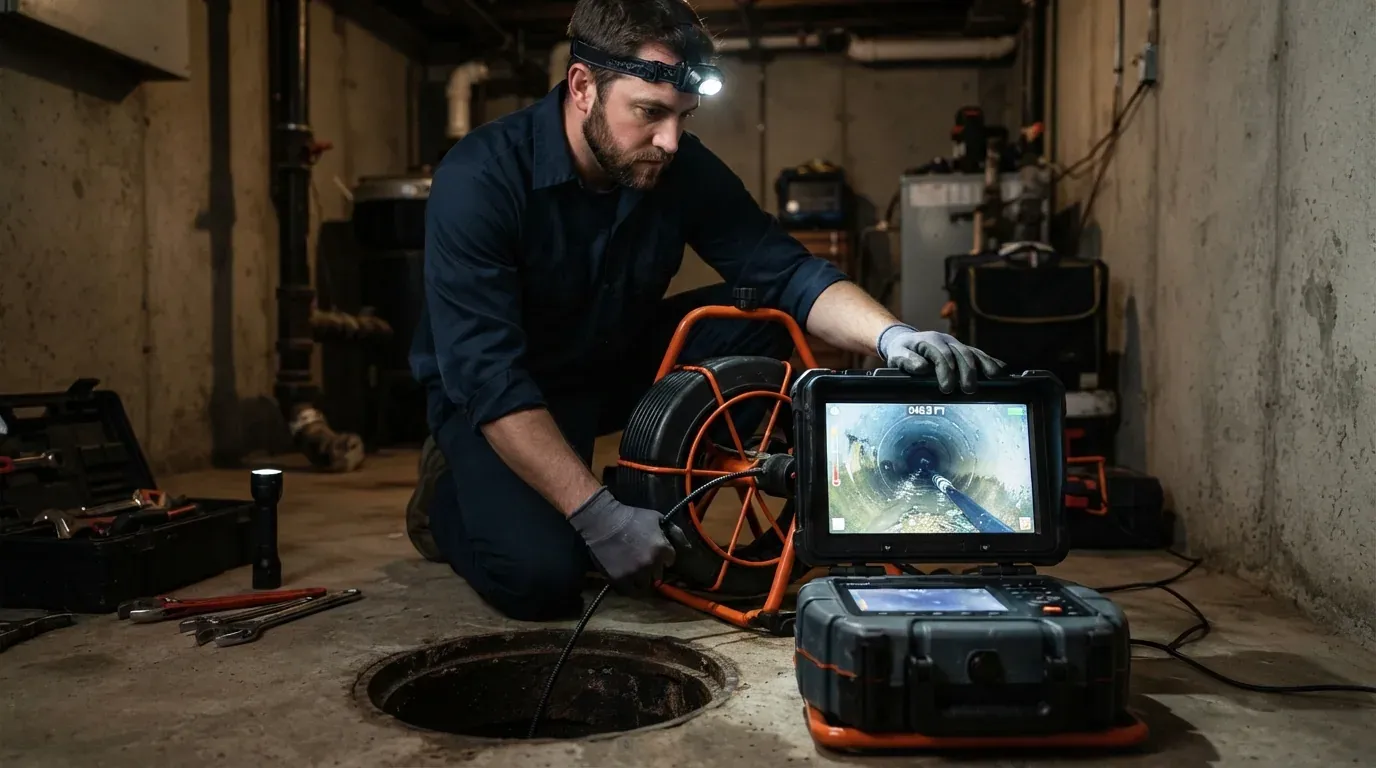
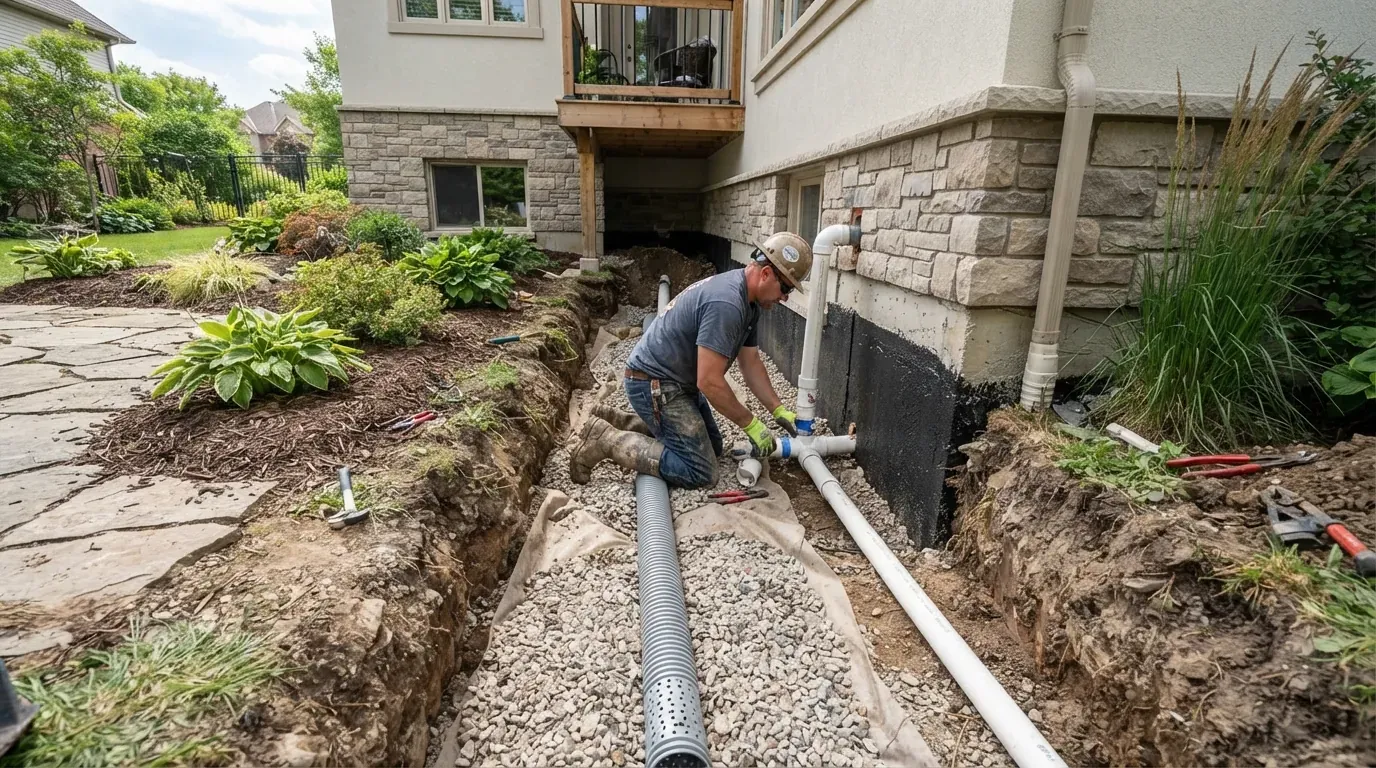
A camera run down the line shows the material, the condition, the depth and, critically, the exact distance to the defect. The camera head transmits its position so the spot gets marked on the ground above. That is what turns a sewer repair into one targeted excavation rather than a trench following the pipe until the problem appears.
A replacement quote given without any of that is pricing the unknown, and the unknown gets priced in your disfavour. Ask to see the footage. Anyone who describes what they saw but will not show you should not be doing your work.
What it costs you to wait
Sewer problems are unusual in that waiting genuinely makes them worse in a measurable way.
Roots thicken and open the joint further. A sag deepens as the ground continues to settle. A crack becomes an offset, and an offset becomes a collapse, at which point trenchless options that would have worked are off the table and open excavation is the only remaining answer.
The other cost is where it eventually fails. A lateral that gives up gradually can be planned around and scheduled. One that collapses on a Sunday puts sewage into a finished basement, and the cleanup routinely costs more than the pipe work.
If you are seeing two or more of the six signs, it is worth looking now rather than after the next backup.
The sewer line page covers repair, lining, bursting and full replacement. Camera inspection explains what the footage shows and how the defect gets located.